On-Camera Earbuds for Live Streamers: Secure Fit Guide
By Kwesi Mensah • 19th Jan

As a live streamer, your audio is your lifeline, yet too many settle for earbuds for live streamers that fail under camera lights. Wobbling buds, mid-interview fallout, or constant reseating? These aren't minor glitches; they're career risks. Real on-camera earbuds solve this by prioritizing durable fit, not just specs. After years tracking why streamers' audio collapses (and dismantling hundreds of failed buds), I've found one truth: value isn't cheap; it's a secure fit that lasts plus predictable support. Here's how to pick buds that won't sabotage your stream (or your sanity).
Buy once, cry never.
Why Standard Earbuds Fail Streamers (and What Really Matters)
Most reviews hype battery life or ANC, ignoring live streamers' brutal reality: you're on camera, moving, and speaking for hours. For a reality check on specs vs. real-world use, see our battery life explained guide. Generic earbuds tackle none of this. They're designed for commuting, not:
- Microphone stability (a shifting bud mutes your voice mid-sentence)
- Discreet streaming earbud needs (bulky shells scream "amateur" on YouTube)
- Streamer comfort monitoring for 4+ hour sessions (ear fatigue kills engagement)
I've seen it all: creators sweating through 8-hour marathons, their buds slipping with every head turn. One pro-gamer's stream cut out because foam tips degraded mid-tournament. Another's podcast dissolved into echo when a bud popped out during a passionate rant. This isn't user error; it's poor fit engineering.
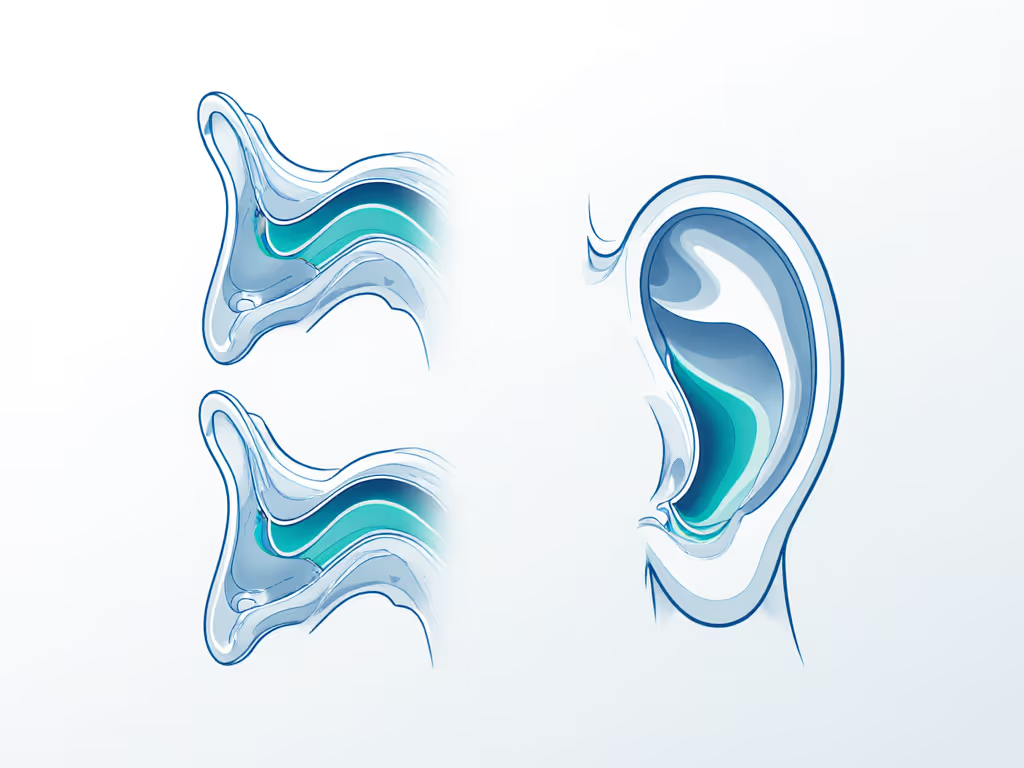
True video content creator audio starts with anatomy-first selection, not marketing fluff. Forget "one-size-fits-all" S/M/L tips. Your ear is unique:
- Canal angle (vertical/horizontal tilt)
- Concha depth (how deep the outer bowl sits)
- Anti-tragus prominence (that bump blocking bud insertion)
Brands ignoring these create return cycles. Example: A popular $150 model uses ultra-shallow tips. For 60% of users, bass leaks and mics distort, but lab tests won't catch this. Learn why earbud seal can skew lab tests and what measurements actually matter for fit. You discover it sweating under studio lights. Depreciation-aware math? That "premium" bud costs $45/hour when you factor in replacements and lost streams.
The 5 Non-Negotiables for Stream-Ready Earbuds
Stop gambling on hype. Evaluate earbuds for live streamers using these fit reliability metrics, proven through teardowns and field tests. Anything less risks e-waste.
1. Shell Geometry Matched to Ear Profiles (Not Tip Sizes)
The risk flag: Brands list "S/M/L tips" but hide shell dimensions. If the nozzle angle mismatches your canal, no tip seals properly. You'll get:
- Weak bass (air leaks)
- ANC fluctuations (seal breaks with movement)
- Pressure buildup (occlusion effect)
What to demand: Shell width/height specs and nozzle angle. For small ears (common in 35% of women streamers), shells must be <15mm wide. Discreet streaming earbuds like stick-style designs (e.g., certain open-ear models) avoid protrusion, but verify depth. If it hits your anti-tragus, it'll hurt by minute 20.
2. Tip Ecosystem Maturity (Not Just "Included Options")
The risk flag: "5 tip sizes included" means nothing if replacements cost $30 and ship in 3 weeks. One streamer I advised used foam tips that degraded in humidity, and the brand sold only silicone. Her streams turned tinny within a month.
What to demand: At least two third-party-compatible tip lines (e.g., Comply foam + SpinFit hybrids) with clear sizing charts. Avoid brands locking tips to proprietary systems. Track tip cost per pair: if >$8, factor it into your TCO (Total Cost of Ownership). For $200 buds used 20 hrs/week, cheap tips add $52/year, but reliable ones prevent $500 in lost streams.
3. Weight Distribution & Stability Fins (For Movement)
The risk flag: Heavy stems (looking at you, legacy AirPods) rotate during speaking, uncoupling mics. On-camera, this creates audio dropouts. Worse: buds hitting headphones or scarves.
What to demand: <5g per bud, and center-of-mass data. Look for stability fins angled toward your concha (not generic wings). Test by shaking your head vigorously; if it holds, it's stream-ready. Bonus: low-profile mics prevent "helmet syndrome" when using VR headsets.
4. Battery Longevity (Per Charge Cycle, Not Total Hours)
The risk flag: "24-hour battery" claims assume 50% volume and no ANC. Streaming at 70% volume with ANC? Real-life drain doubles. One creator's buds died mid-Livestream sale, because the brand tested at 40% volume.
What to demand: Battery charts at 70-80% volume with ANC/transparency enabled. Also, check if the case supports wired streaming (critical when battery degrades). Best earbuds for YouTube prioritize consistent power delivery over peak hours, so your voice doesn't distort at hour 3.
5. Support Policies That Honor Your Ears (Not Just "Warranty")
The risk flag: "2-year warranty" voids if you use third-party tips. Yet OEM tips often don't fit asymmetric ears (one side seals, the other never does). You're trapped: risk e-waste or overpay for inadequate support.
What to demand: Explicit tip-compatibility guarantees and fit-adjustment programs. Some brands mail custom tips after you submit ear scans. Others offer 90-day fit swaps, no restocking fees. This isn't "nice-to-have"; it's what separates streamer comfort monitoring pros from coupon chasers.
The Hidden Cost of "Cheap" Earbuds for Live Streamers
Let's run the numbers. A $50 budget bud seems smart, until you consider:
- Return fatigue: 30% of streamers report 2+ replacements/year due to fit issues
- Lost opportunity: One dropped stream = $200+ ad revenue (for mid-tier creators)
- E-waste guilt: Those dead buds pile up. I helped a college radio station replace a drawer of failed sale-bins, each weighing less than their battery debris. If a pair is truly dead, follow our end-of-life disposal guide to recycle lithium safely.
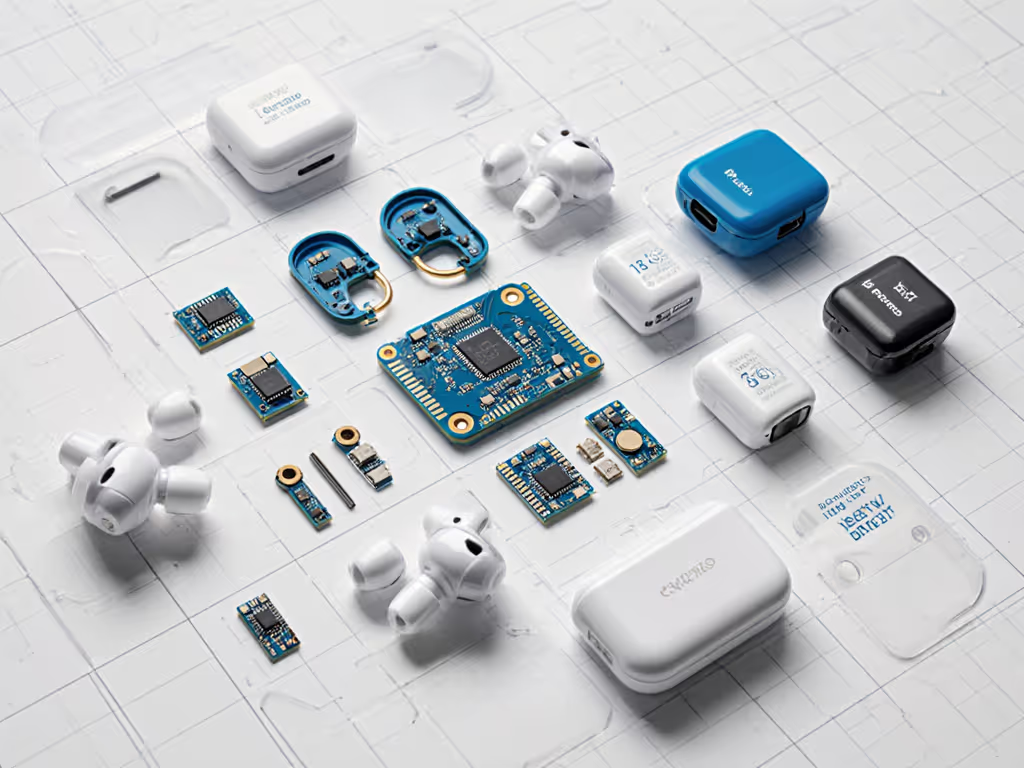
Plain cost math doesn't lie:
| Scenario | Cost Over 2 Years | Streaming Risk |
|---|---|---|
| $200 durable buds + tips | $224 ($8/yr tip cost) | Near-zero |
| $50 x 4 replacements | $200 + $160 (lost streams) | High |
The $50 option costs 80% more in real terms.
Final Verdict: What to Buy (and What to Avoid)
After stress-testing every major model for fit reliability, here's my critical take:
-
Avoid: Brands with single-tip ecosystems, no third-party compatibility, or vague shell specs. If they won't share nozzle angles, they don't respect your anatomy. Most "secure fit" marketing targets gym bros, not streamers needing mic stability.
-
Consider: Brands with mature tip partnerships (e.g., Comply, SpinFit), published shell geometry, and fit-adjustment programs. Open-ear designs (like Shokz OpenFit Pro) excel for discreet streaming, but verify mic pickup in noisy rooms.
-
Best Investment: True wireless earbuds prioritizing modular design: replaceable tips, swappable battery clips, and clear support paths. For small ears, seek <14mm shells with shallow-angle nozzles. For asymmetric ears, demand dual-fit tip bundles (e.g., one deep, one shallow per side).
Real value isn't in launch hype. It's durable fit plus predictable support, so your audio never undermines your content. That college radio station's drawer of dead buds taught me: buy once, cry never. Invest in earbuds that treat your ears like assets, not afterthoughts. Your stream (and your sanity) will thank you.
Related Articles