Earbuds vs Hearing Aids: Fit and Sound Quality
By Lina Kovács • 19th Feb
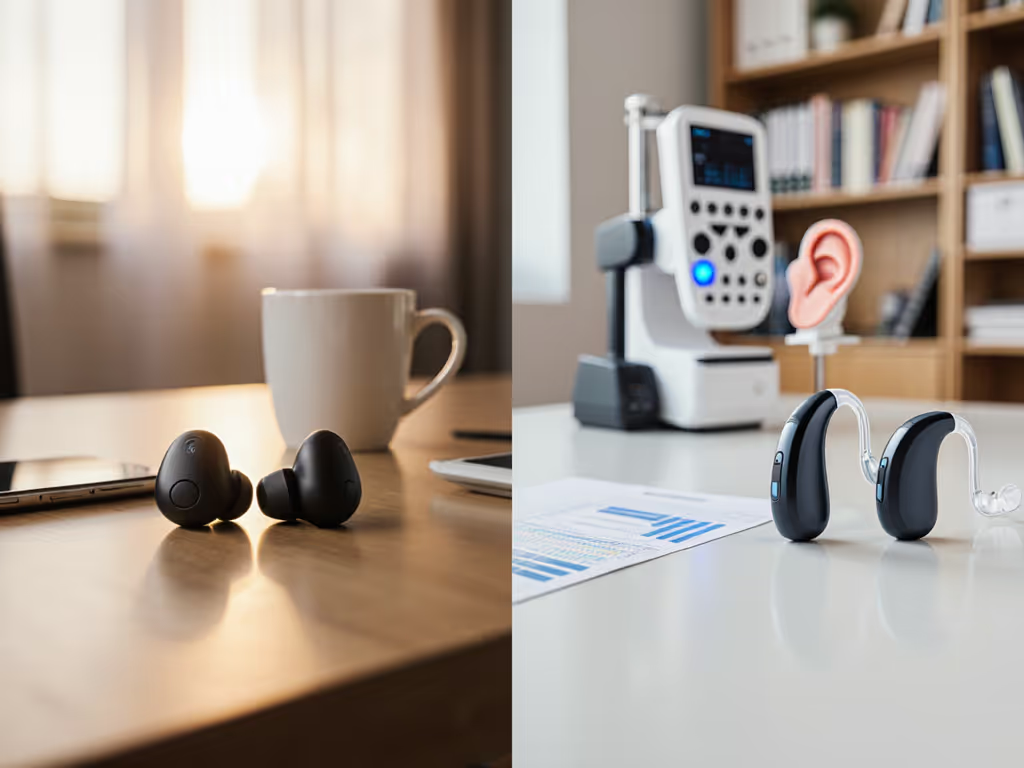
When comparing earbuds versus hearing aids, the distinction hinges on more than marketing categories, it rests on fit mechanics, tuning architecture, and the fundamental purpose each device serves. Hearing-impaired audio devices occupy two distinct niches: consumer earbuds engineered for leisure and signal processing, and medical hearing aids designed for audiometric precision. Understanding where your listening needs actually fall requires examining how fit determines perceived tuning before any features or EQ matter at all.
The Functional Divide
Earbuds are consumer technology developed primarily for general sound enhancement and leisure use, while prescription hearing aids are medical devices specifically engineered to address diagnosed hearing loss. This categorical difference shapes everything downstream: design philosophy, tuning targets, professional oversight, and the level of customization available to you.
Apple AirPods Pro 2, for instance, incorporate hearing-enhancement features including "Conversation Boost," which uses directional audio filters to amplify voices directly in front of you while reducing background noise. These features are compelling, but they operate within the constraints of consumer-grade audio design. For a broader look at non-clinical tools that can help with everyday hearing challenges, see our earbud accessibility features guide. Prescription hearing aids, by contrast, are custom-fitted to your specific audiometric profile and can incorporate advanced sound processing like noise reduction, directionality, speech enhancement, compression-expansion, and own-voice reduction, capabilities absent from even the most feature-rich earbuds.
Core Capabilities: Earbuds and "Hearables"
Modern earbuds, particularly true wireless stereo (TWS) models with hearing-enhancement modes, function as personal sound amplification products (PSAPs). A key finding: studies show that PSAPs can provide comparable benefits to hearing aids for people with mild to moderate hearing loss, and in some cases may be as beneficial as traditional hearing aids. This convergence is real and worth taking seriously if your hearing loss sits in the mild-to-moderate range.
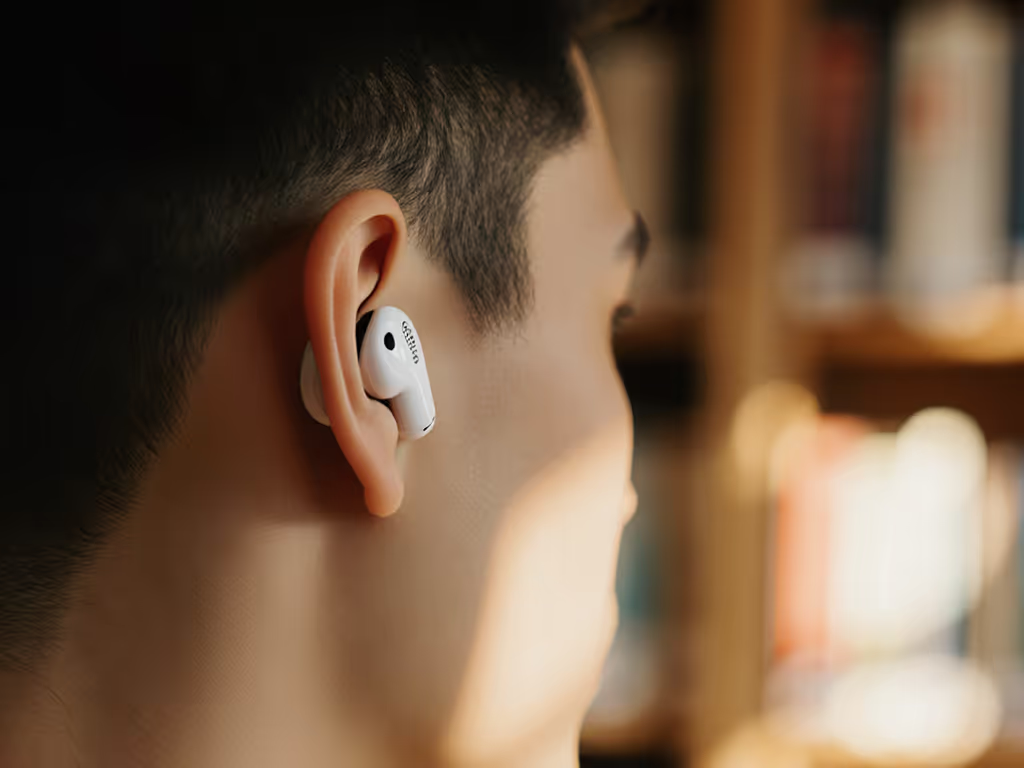
Earbuds excel at certain tasks. They offer sleek form factors, portability, and seamless integration with smartphones and other wireless devices. For direct audio streaming (playing music or podcasts through Bluetooth), AirPods Pro 2 significantly outperform most prescription hearing aids due to their primary design function as consumer audio devices. The hearing-aid feature is supplementary; the earbud function is primary. They are also cheaper than prescription hearing aids, which is a real consideration for budget-conscious users.
Yet earbuds operate under a one-size-fits-all philosophy. Your ears receive the same amplification curve, the same compression settings, and the same noise-reduction algorithm as the next user, regardless of your unique hearing thresholds across frequency ranges.
Prescription Hearing Aids: Medical Precision
Prescription hearing aids are custom-tailored to the user's specific hearing needs. This tailoring begins with a comprehensive hearing assessment (more exhaustive than a casual AirPods setup) that checks for tinnitus, earwax blockages, and other factors affecting auditory function. The device is then programmed to match your hearing loss prescription using real-ear measurement, a clinical gold standard.
A critical performance metric: when tested against mild-to-moderate hearing loss targets, prescription hearing aids achieved a score of 4.8 out of five for speech-in-quiet performance, while AirPods Pro 2 managed only 1.8 out of five despite user tuning. For speech-in-noise performance, arguably the most demanding real-world scenario, prescription aids scored 4.6 out of five versus AirPods' 0.8 out of five. These gaps reflect the difference between prescriptive fitting and algorithmic approximation.
Beyond raw amplification, prescription hearing aids come with professional care: testing, fitting, adjustment, and ongoing support from specialized audiologists. Users benefit from expertise they do not access alone.
How Fit Writes the Frequency Plot
Here lies the insight that anchors everything: fit determines perceived tuning before EQ or features enter the equation.
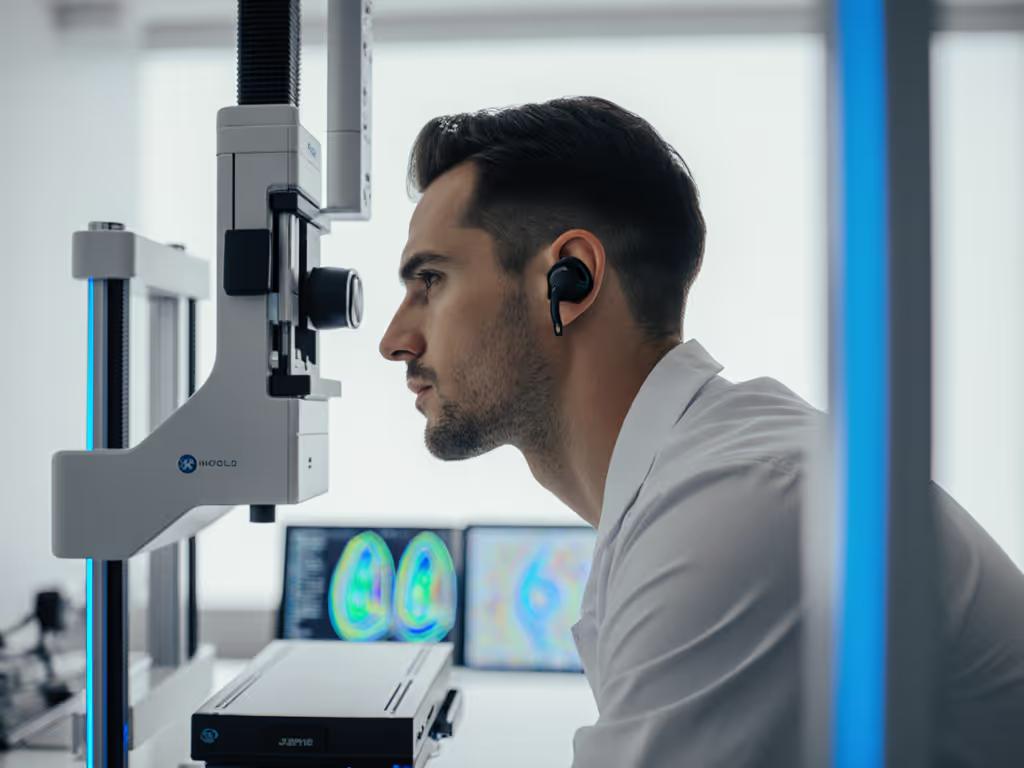
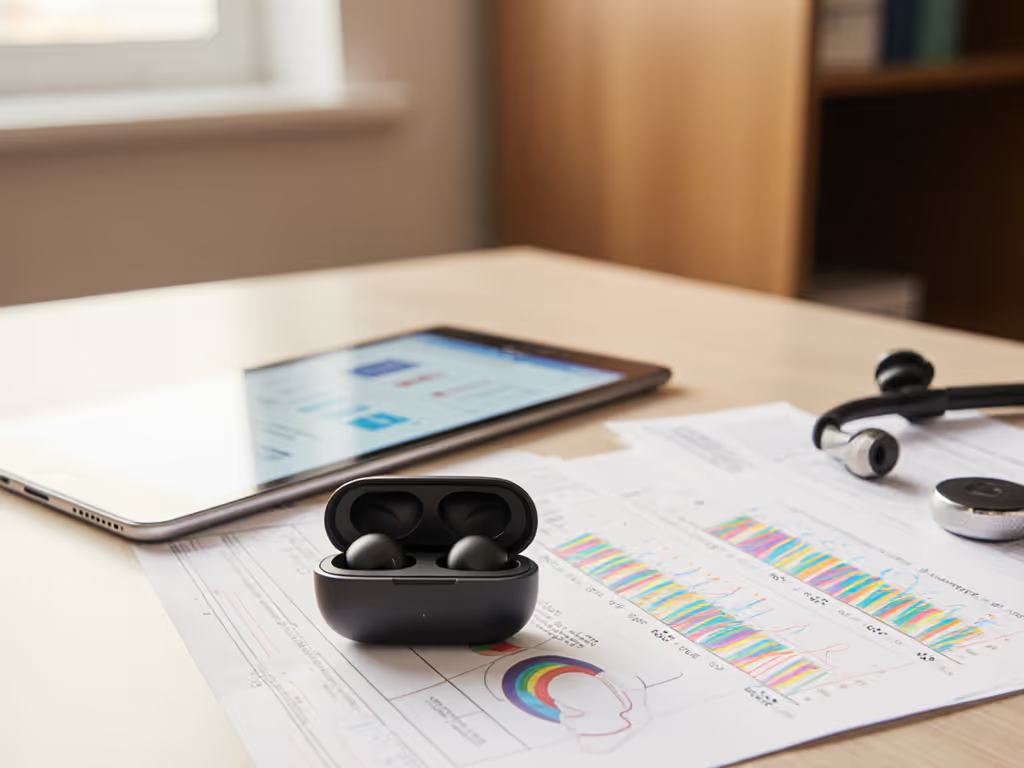
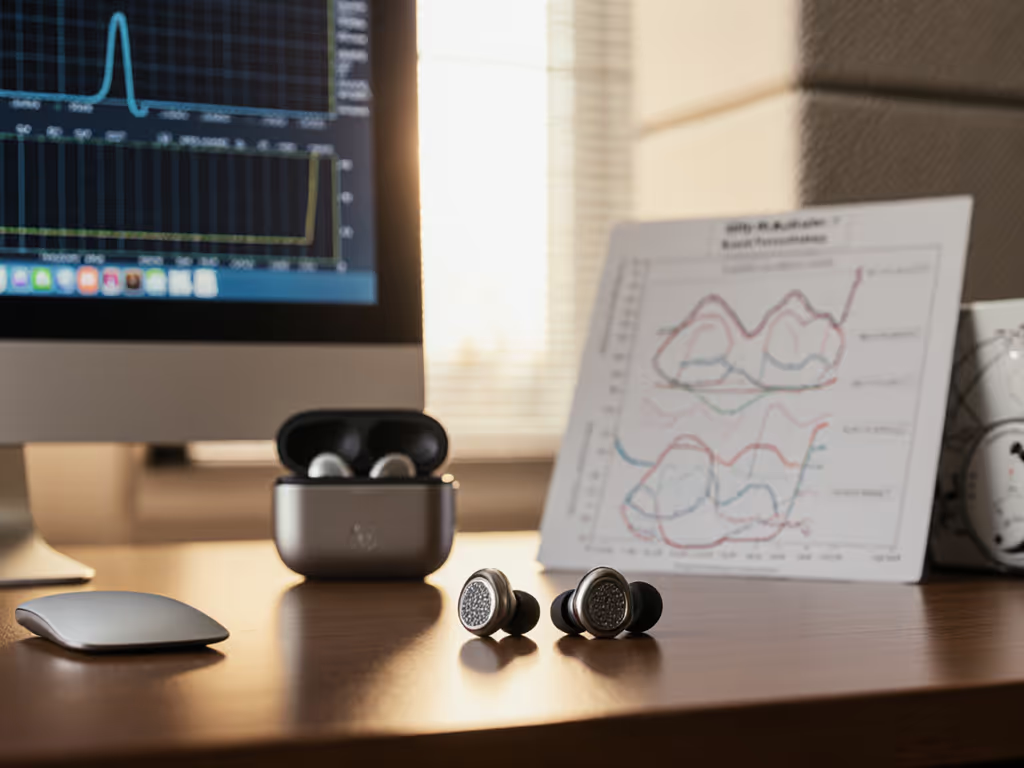
Consider a clinical scenario. In a studio as quiet as snowfall, an audiologist swaps tip sizes and seals across different earpiece configurations. On the measurement rig, the response curve shifts dramatically; a leak carved a canyon in the low frequencies where a proper seal should have smoothed the plot. The visual pattern clicked with what listening revealed: without adequate seal, no amount of digital equalization recovers what the ear canal boundary condition has destroyed. Seal first, then EQ. Because you cannot equalize what isn't reaching you. If you want to understand how seal quality skews measurements and listening impressions, read how earbud seal shapes audio testing results.
This principle applies equally to earbuds and hearing aids, though the implementation differs. Earbuds demand that you manually find the right tip size and insertion depth. Hearing aids rely on professional fitting to establish that seal. A broken seal in either case undermines frequency response integrity: low-frequency extension collapses, ambient noise bleeds in, and active noise cancellation becomes unreliable because the device is chasing a leaking acoustic boundary rather than managing a sealed canal.
Research confirms this. Studies examining AirPods transparency mode found that it alters interaural level differences and disrupts high-frequency spectral cues, affecting spatial hearing, a direct consequence of seal consistency and acoustic pathway design. Learn how different brands implement and tune transparency mode and where it helps or hurts spatial awareness.
Direct Comparison: Key Differences
| Dimension | Earbuds (Consumer) | Prescription Hearing Aids |
|---|---|---|
| Customization | Generic amplification curve; user adjusts through app or manual tuning | Programmed to match your exact audiometric thresholds via real-ear measurement |
| Fit Method | User selects from S/M/L tips; trial-and-error sealing | Professional fitting and verification; custom molds available |
| Advanced Features | Noise cancellation, directional modes, Bluetooth streaming | Noise reduction, speech enhancement, directionality, compression, own-voice reduction, feedback cancellation |
| Speech-in-Noise Performance | 0.8/5 (AirPods Pro 2 test result) | 4.6/5 (prescription aid test result) |
| Professional Support | None; self-managed | Ongoing audiology care, adjustments, troubleshooting |
| Cost | $200-$300 | $1,000-$6,000+ (higher upfront; includes professional services) |
| Prescription Matching | Approximate; limited by generic curves | Precise; adjusted to hearing loss prescription |
Performance Under Real Conditions
Both device categories struggle with similar environmental challenges (wind noise, rapid sound-level shifts, microphone pickup during calls), but for different reasons. Earbuds falter because their fit may break under motion or sweat; hearing aids falter because directional microphone arrays are less forgiving in consumer-grade implementations.
The convergence of earbuds and hearing aids is real. Emerging technologies like Auracast, a Bluetooth broadcast standard, will allow both earbuds and hearing aids to receive public audio streams seamlessly, effectively treating them as interchangeable receivers for certain applications. For the tech behind Auracast and what LE Audio changes for everyday listening, see LE Audio explained. Biometric sensors and AI-powered algorithms are entering earbud firmware, enabling personalized sound profiles closer to what hearing aids achieve today.
However, proximity does not mean parity. Prescription hearing aids remain superior for diagnosed moderate-to-severe hearing loss because their tuning is prescriptive, not aspirational. They can deliver precise gain at specific frequencies to match your loss curve; earbuds approximate that curve within their architectural limits.
When to Choose Each
Earbuds make sense if:
- Your hearing loss is mild or you have normal hearing but seek sound enhancement for noisy environments
- You prioritize aesthetic minimalism and portability
- You want direct audio streaming (music, podcasts, calls) as the primary function
- Budget constraints are decisive and you cannot justify the cost of prescription devices
Prescription hearing aids are necessary if:
- You have diagnosed, moderate-to-severe hearing loss
- You struggle with speech intelligibility in everyday settings
- You need professional verification that the device matches your prescription
- You want adaptive algorithms tuned to your unique audiometric profile
- Long-term audiology support and adjustments add measurable value to your listening life
The Fit-First Path Forward
Whatever device you choose, treat fit as non-negotiable. For earbuds, that means exhaustively testing every tip size, material, and insertion technique before settling on a purchase. Cheap experimentation with silicone and foam tip aftermarkets (usually under $20 per set) can unlock comfort and seal that stock tips never deliver. For model-by-model ergonomics and tip recommendations, check our comfort fit earbuds comparison.
For hearing aids, work with your audiologist to confirm seal and comfort before you leave the clinic. Real-ear measurement should be part of your fitting; ask to see the curve. If the device doesn't feel stable during movement or speech, report it. Fit writes the frequency plot before any EQ matters, professional or algorithmic.
Looking Deeper
The earbuds-versus-hearing-aids landscape will blur further over the next five years as consumer audio and medical audio converge technologically. Auracast broadcast capabilities and biometric monitoring will blur categorical lines. Yet the fundamental divide remains: prescription devices are built to treat diagnosed hearing loss with clinical precision, while consumer earbuds approximate that goal within commercial constraints.
Your choice depends on whether your hearing loss is mild enough to benefit from approximation, or whether you need precision. Either way, seal first, features second. Minimal looks, maximal clarity.
Related Articles