Directional Hearing Earbuds Compared: Fit & Stability
By Arjun Patel • 27th Mar

Directional hearing earbuds and sports earbuds have fractured into two competing camps, and your ear shape, routine, and sweat profile will determine which camp actually stays put. Unlike sealed in-ear monitors that trade environmental awareness for isolation, directional audio devices use miniaturized speakers angled just outside the ear canal to deliver sound with minimal leakage while keeping your surroundings audible. But a sophisticated driver means nothing if the earbud rotates, migrates, or pops out halfway through a run. Stability is not an afterthought. It is the prerequisite.
This guide walks you through a replicable comparison framework, one that measures retention under realistic conditions, stress-tests fit geometry for your ear profile, and separates credible ergonomic design from marketing claims.
Step 1: Understand the Two Core Technologies
Before comparing specific models, audit the technology foundation, because insertion depth, nozzle angle, and seal strategy fundamentally shape how an earbud will move on your ear.
Directional Audio Speakers
Directional earbuds use ultra-directional drivers and real-time adaptive audio calibration to project a focused audio beam into your ear canal with minimal outward leakage. Brands like Oladance, Bose, and JBL engineer these devices with angled, miniaturized speaker baffles positioned millimeters from the canal entrance. This design typically yields superior audio fidelity, bass response, and stereo imaging compared to bone conduction alternatives, and environmental awareness remains strong because the canal stays open.
The trade-off: directional earbuds must maintain a stable, seated position in your concha and anti-tragus to preserve the acoustic geometry the driver assumes. Micro-migrations upward or rotation away from the axis will degrade both sound quality and the hearing-safety profile. An earbud that wiggles is an earbud that leaks its intended sound everywhere, and then you instinctively turn the volume up.
Bone Conduction
Bone conduction devices, exemplified by Shokz, bypass the ear canal entirely and transmit vibrations through the temple bones to the inner ear. This method offers total ear canal freedom and is better for extreme situational awareness, cyclists in high-traffic zones, for instance. However, bone conduction does not deliver the bass or stereo depth that directional drivers provide, and the vibrational sensation itself can fatigue some users after prolonged wear.
From a stability standpoint, bone conduction earbuds face a different challenge: they must apply consistent, controlled pressure against the temporal bone without shifting position. A loose band or insufficient contact pressure means the vibration pathway weakens, forcing users to adjust or re-seat constantly.
Step 2: Measure Fit Geometry for Your Ear Shape
Your ear is not generic. Neither are the earbud's nozzle angle, shell width, and insertion depth. Measure, then opine.
Before buying, quantify three dimensions on your ear:
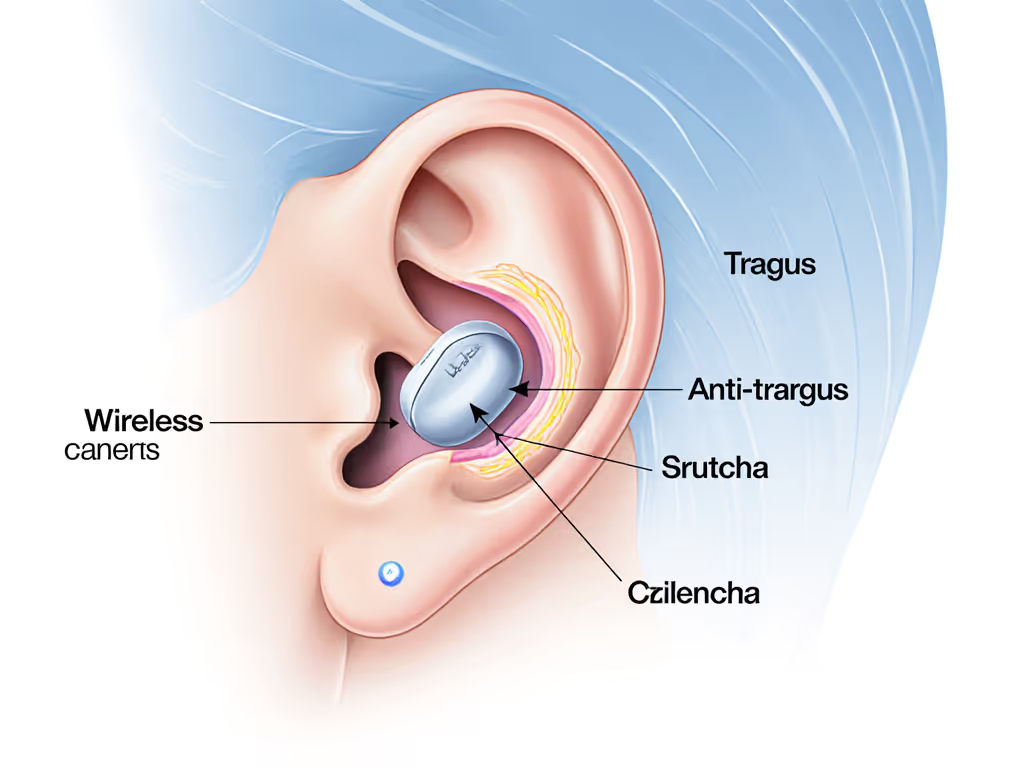
Concha Depth: Using a small ruler or calipers, measure the depth of your ear's concha (the bowl-shaped cavity where the earbud housing sits). Typical range: 12-18 mm. Shallow concha users need shells with lower profile; deep concha users can accept deeper insertion angles. Mismatched geometry = immediate rotation and looseness.
Canal Diameter & Nozzle Fit: The earbud's nozzle must enter your canal at an angle that creates a stable contact line between the tip and canal wall. If the nozzle is too wide or enters at the wrong angle, the tip will sit loose or create pressure hotspots at the 12 o'clock or 6 o'clock position. Measure your canal opening at the narrowest point (usually 5-8 mm). Compare that directly to the manufacturer's stated tip diameter and insertion angle. Exact figures rarely appear in spec sheets; that is where quality manufacturer support or fit quizzes become essential.
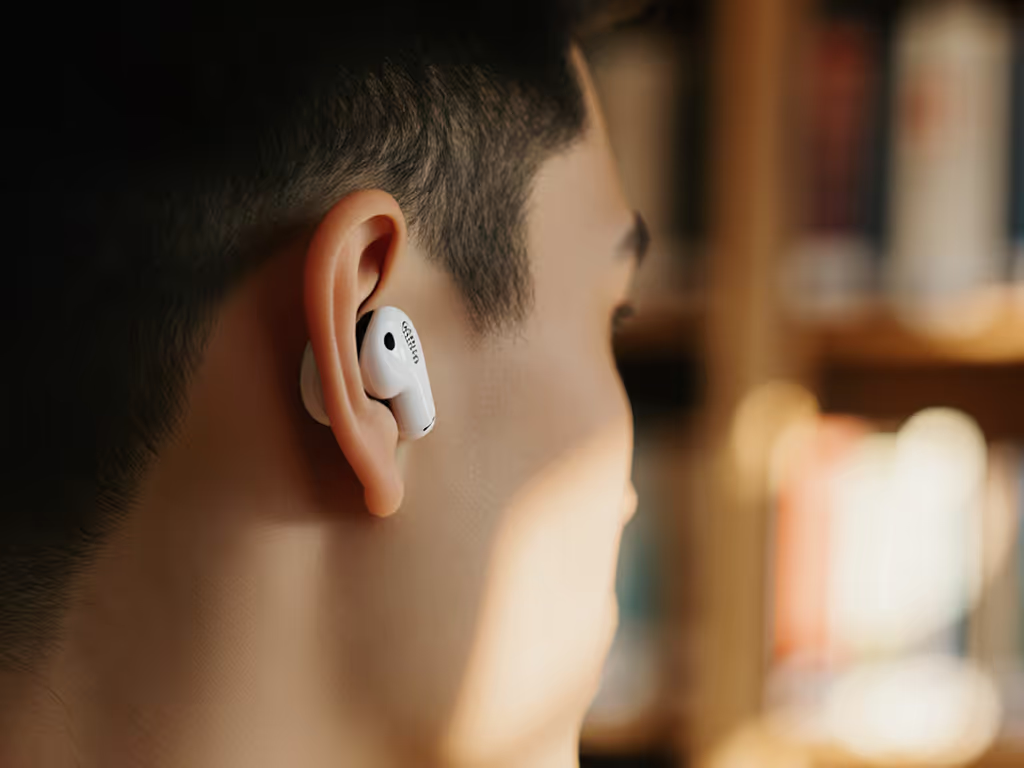
Tragus and Anti-Tragus Support: These cartilage structures act as secondary stabilizers. If the shell's heel (rear contact point) does not nestle firmly into the anti-tragus notch, the earbud will pivot forward and upward with head motion. Measure the gap between tragus and anti-tragus on your ear; earbuds with wide, angled heel geometry will fill this space better than narrow or shallow designs.
Document these measurements. Later, when comparing specific models, you will cross-reference nozzle angle, shell width, and tip offset against your personal data.
Step 3: Establish Baseline Stability Thresholds
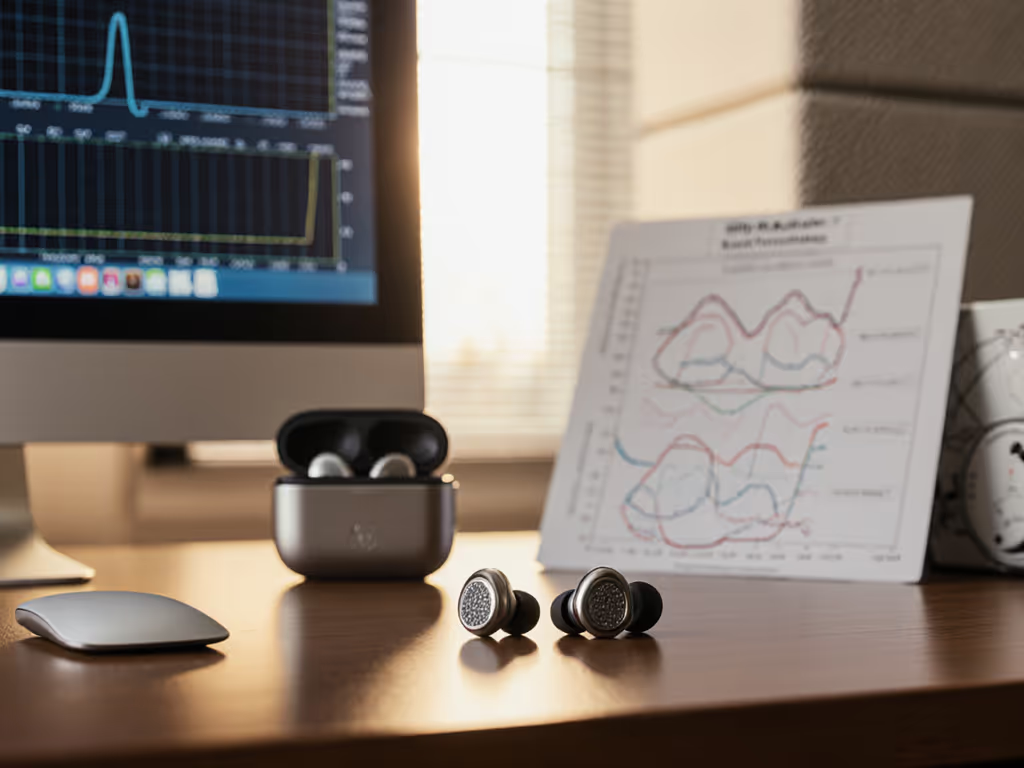
Stability must be testable, not subjective. Here is a replicable protocol:
The Headshake Test: Insert the earbuds at your preferred fit. Tilt your head side to side (like saying "no") ten times at 2 cycles per second. Do the buds shift? By how many millimeters? A quality fit should show <1 mm migration. Log the result.
The Sweat Saturation Test: With earbuds sealed in your ear, apply a water-soluble sweat simulation (or actual sweat if available) to the stem and seal interface. Perform five minutes of head tilts and vertical movements. Re-measure migration. Quality retention should hold <2 mm even under saturated conditions. Glossy plastic housings and standard silicone tips often fail this step (a fact confirmed across multiple ear profiles and routines). This is where your monsoon half-marathon discipline applies: if the fit moves under controlled moisture and motion, it will fail under real running, HIIT, or cycling.
The Insertion Repeatability Test: Remove and reinsert the earbuds five times, aiming to replicate your "normal" fit each time. Do you land in the same position? If insertion is inconsistent by more than 1-2 mm, the earbud's geometry or tip taper is not intuitive for your ear shape. Inconsistent insertion = inconsistent seal = inconsistent sound and ANC performance.
Step 4: Compare Retention Architectures
Now inspect how each earbud tries to stay put.
Wing or Fin Designs
Wing stabilizers extend from the shell to anchor in the anti-tragus and outer ear folds. Models like the Shokz OpenDots ONE use a discreet clip-on fastening combined with a compact 6.5 g weight to distribute pressure widely and resist rotation during motion. The trade-off: wings add bulk and can cause hotspot pressure if geometry is misaligned with your ear shape. Measure the angle and width of each product's wing and compare to your anti-tragus relief. If your anti-tragus is narrow, a wide wing will dig in and cause fatigue within 30 minutes.
Fit-Tuning Ecosystem
The best stability comes from a product line offering multiple nozzle lengths, tip materials, and ear-hook angles. For example, the soundcore Aerofit 2 Pro integrates an adjustable ear hook with 5 gears and a 56-degree rotation range, ensuring universal wearability across ear shapes. This is precision fit design, not one-size-fits-all assumption. When comparing models, count the number of independent fit variables (tip sizes, nozzle angles, wing options, hook adjustability) each offers. Models with 3+ variables will accommodate 80% of ear variance; single-fit models will not.
Weight and Center of Mass
An earbud weighing 7+ grams will gradually migrate downward during a 60-minute run, especially in humid conditions when silicone tips soften slightly. Seek models ≤6.5 g per bud and verify that the heaviest component (motor, battery) sits deep in the shell, not at the outer face. This lowers the center of mass and resists gravitational rotation.
Step 5: Test Seal Quality and Consistency
A seal is not binary (yes/no). It has degrees, and inconsistent seal is worse than no seal at all, because inconsistency causes audio dropout, bass collapse, and ANC fatigue. For a deeper dive on why seal quality shapes perceived fidelity, see our earbud driver tech guide.
The Bass Response Test: Insert the earbuds and play a 60 Hz tone at moderate volume (60 dB). Do you hear deep, even bass, or is it thin and one-sided? Uneven bass indicates an asymmetric seal, common when asymmetric ears are force-fitted into symmetric shells. If one side seals and the other never does, stability beats isolation; consider a directional or open design, not deeper in-ear tips.
The ANC Consistency Stress Test: Enable ANC and sit in a consistent ambient noise environment (fan, car engine, ~70 dB). With the earbuds stationary, record perceived noise reduction for 2 minutes. Now perform gentle head tilts and small jaw movements (simulating chewing or talking). Does ANC dropout occur? If ANC is stable despite small motion, the seal is preserved; if it flutters, the earbud is rotating and breaking seal. To understand how different implementations work, read our ANC technology explainer.
Step 6: Evaluate Sweat and Moisture Durability
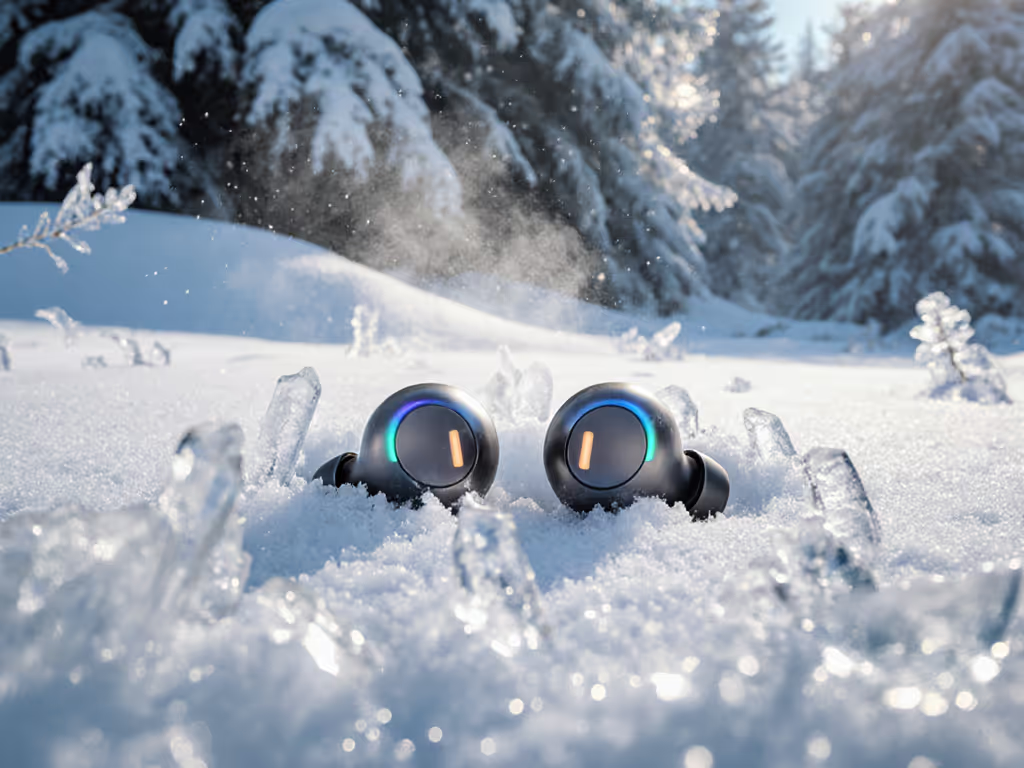
Stability beats slogans when sweat and gravity show up. This is non-negotiable for running directional sound or cycling safety audio applications.
Examine the earbud's IP rating: IP54 is bare minimum for light sweat; IP67+ is required for serious cardio and water exposure. If you need a refresher on water resistance standards, see our IPX ratings guide. But IP rating alone is incomplete. Test the actual coupling between tip and stem under humid conditions. Over 3-5 weeks of daily use:
- Do foam tips retain firmness, or do they soften and slip?
- Does silicone develop a tacky film that changes the seal?
- Does the nozzle fit remain snug, or does movement increase over time?
Durable earbuds maintain <1 mm additional migration after 30 days of sweat exposure. Log weekly insertion tests and compare baseline (week 1) to week 4.
Step 7: Assess Environmental Awareness vs. Isolation Trade-off
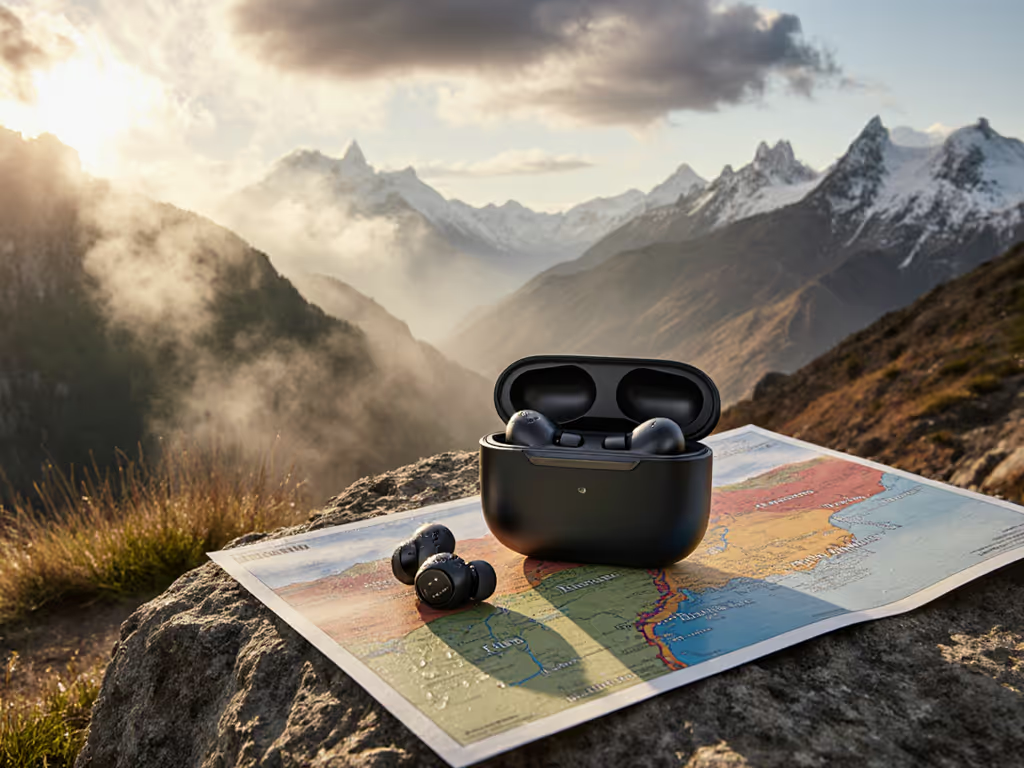
For hiking environmental awareness and urban commuting, directional designs provide an advantage: you hear your music at a comfortable level and retain ambient audio without switching modes. If you rely on sealed in-ears for daily use, learn how transparency mode works to stay aware safely. Bone conduction similarly excels at transparency but sacrifices bass and stereo width.
Compare models on this axis:
- Bone Conduction: 100% ear canal openness, excellent situational awareness, low bass impact.
- Directional Audio: 80-90% canal openness (minimal leakage seal), strong situational awareness with better bass, requires stable fit to preserve acoustic design intent.
- Sealed In-Ear (for reference): 0% canal openness, maximum isolation, highest audio fidelity, but poor for cycling safety audio and hiking.
Your routine determines the right choice. High-traffic cycling demands bone conduction or directional. Office work or controlled fitness allows sealed earbuds.
Step 8: Cross-Reference Selective Noise Filtering and Call Quality
Directional earbuds with multi-microphone arrays and AI-driven sound processing can isolate voice during calls while preserving ambient audio during listening. However, this feature depends entirely on fit stability. If the microphone orientation shifts due to earbud rotation, voice pickup becomes inconsistent and wind noise increases.
Before purchase, confirm:
- Number of microphones (minimum 2; ideally 3+).
- Whether microphone orientation is fixed or adjustable with wing/hook geometry.
- Real-world call test data (not just lab metrics).
Earbuds with adjustable fit (like the Aerofit 2 Pro) allow you to lock microphone angle into your personal optimal position, ensuring stable call quality week after week.
Step 9: Summarize Your Comparison Matrix
Create a simple spreadsheet:
| Criteria | Weight | Model A | Model B | Model C | Your Ear Profile Match |
|---|---|---|---|---|---|
| Concha Fit (geometry alignment) | 25% | 8/10 | 7/10 | 9/10 | ✓ Model C |
| Stability Under Sweat (migration test) | 30% | 6/10 | 8/10 | 9/10 | ✓ Model C |
| Seal Consistency (bass test) | 20% | 7/10 | 8/10 | 9/10 | ✓ Model C |
| Environmental Awareness (relevant routine) | 15% | 9/10 | 8/10 | 8/10 | Model A or C |
| Durability Over 30 Days | 10% | 6/10 | 7/10 | 8/10 | ✓ Model C |
| WEIGHTED TOTAL | - | 7.1/10 | 7.6/10 | 8.7/10 | ✓ Model C |
Weight each criterion based on your routine. Runners and cyclists prioritize stability and sweat durability (30-50% combined); office commuters may weight comfort and ANC consistency higher (25-30%).
Final Verdict: Measure, Then Opine
Directional hearing earbuds offer sophisticated sound engineering and exceptional environmental awareness, but only if they stay in place. A 10 mm migration during your Tuesday 5 K destroys both acoustic design intent and the hearing-safety promise of open-ear audio.
Your comparison must start with geometry, not specs. Measure your concha depth, canal diameter, and tragus relief. Cross-reference these measurements against nozzle angle, shell width, wing configuration, and fit-tuning ecosystem of each model. Run the three stability tests (headshake, sweat saturation, insertion repeatability). Log seal consistency over 4 weeks of real use.
Directional earbuds from established brands in this category (those offering adjustable hooks, multiple tip geometries, and documented nozzle angles) will outperform one-size-fits-all designs every time, in every test, in every sweat-soaked condition.
Stability is not a feature. It is a prerequisite. Choose accordingly.
Related Articles