Earbud Driver Tech: Why Seal Quality Defines Sound Accuracy
By Lina Kovács • 23rd Oct
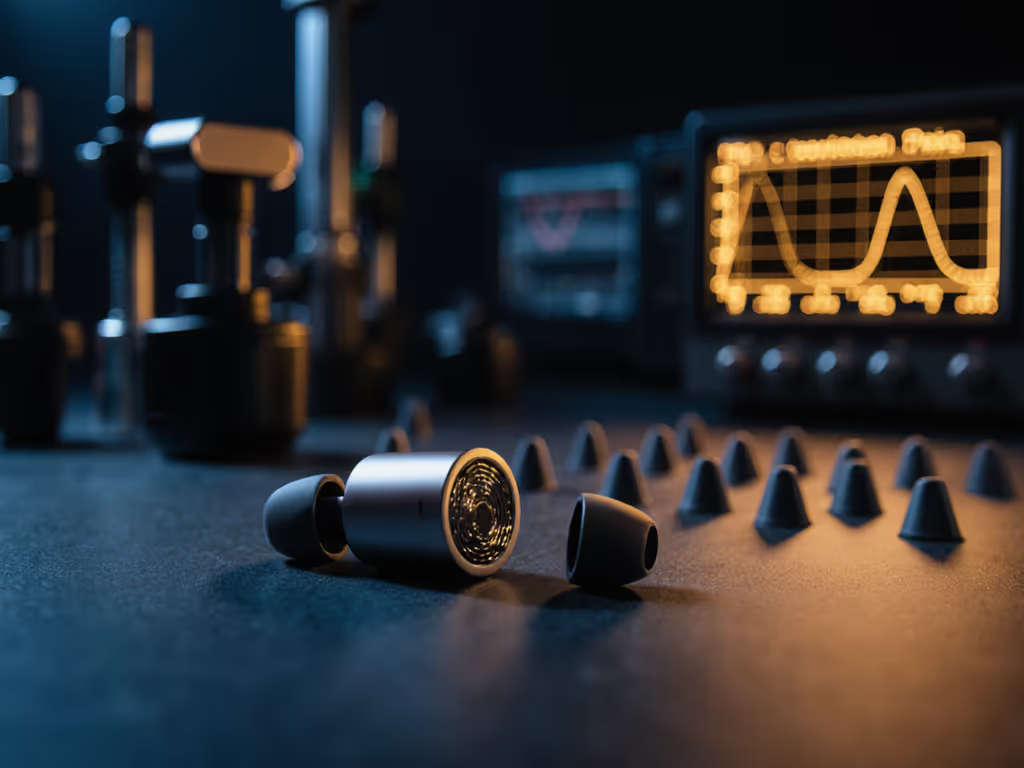
When you're evaluating earbud driver technology, the conversation often starts with dynamic vs. balanced armature or planar magnetic designs, but what if the most critical factor isn't the driver at all? For wireless earbuds, seal quality fundamentally reshapes how every driver type performs, turning theoretical specs into your actual listening experience. To understand another variable beyond drivers and fit, see how Bluetooth audio codecs shape sound quality. As I discovered in a studio silent enough to hear snow settle, a poor seal doesn't just affect sound, it writes the frequency plot before any EQ matters. Seal before EQ isn't just advice; it's the physics of what reaches your eardrum.
Why Driver Specs Alone Mislead You
Most reviews dissect driver types like menu items: dynamic drivers (common in AirPods and budget buds) are praised for bass warmth, balanced armature (seen in Shure's SE215 PRO) for midrange clarity, or planar magnetic (like Audeze's over-ear models) for speed. But these labels ignore a critical variable: fit. A driver's theoretical frequency response is irrelevant if air leaks sabotage the signal path. Consider:
- Dynamic drivers use a diaphragm/coil/magnet system (like tiny speakers) to move air. Cheap plastics in budget models can limit bass extension, but even liquid-crystal polymer (LCP) diaphragms won't deliver promised low-end if seal fails.
- Balanced armature drivers (common in high-end IEMs) use a pivoting armature instead of a diaphragm. They're efficient for mids/highs but lack bass reach without a perfect seal, hence why hybrid models (like some wireless earbuds) pair them with dynamic drivers.
- Planar magnetic earbuds (still rare) use a flat conductor suspended between magnets. Their wide frequency range (e.g., 10Hz-50kHz) collapses into muffled chaos if seal leaks disrupt their precise wavefronts.
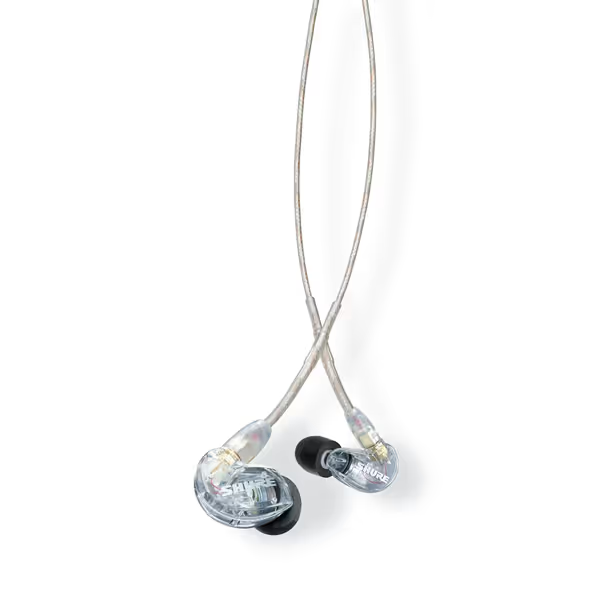
Shure SE215 PRO Wired Earbuds
Professional sound isolation and deep bass for immersive listening and monitoring.
$109
Sound IsolationBlocks up to 37 dB
Sound IsolationBlocks up to 37 dB
Pros
Exceptional sound isolation for distraction-free listening.
Detailed audio with powerful, deep bass.
Secure over-ear fit, ideal for active use and monitoring.
Cons
Comfort can be mixed depending on ear shape.
Customers find these earbuds deliver good sound quality and excellent noise isolation, and consider them well worth the price. The comfort, durability, and functionality receive mixed feedback - while some find them comfortable and durable, others report pain in the ears and premature failure of the earbuds. The fit is also mixed, with some appreciating the wrap-around design while others find it awful.
Customers find these earbuds deliver good sound quality and excellent noise isolation, and consider them well worth the price. The comfort, durability, and functionality receive mixed feedback - while some find them comfortable and durable, others report pain in the ears and premature failure of the earbuds. The fit is also mixed, with some appreciating the wrap-around design while others find it awful.
The hard truth: No driver (however advanced) can reproduce frequencies it isn't transmitting to your ear. A canyon-sized dip at 100Hz in your frequency response? That's not the driver's fault; it's a leak starving bass energy.
How Seal Failures Physically Distort Sound
In acoustics, a compromised seal doesn't merely reduce bass, it creates comb filtering. Here's what happens:
- Air leaks act as secondary sound ports, causing delayed sound waves to cancel specific frequencies (like ported speakers, but uncontrolled).
- Bass energy dissipates instead of pressurizing your ear canal. Below 200Hz, even a 0.5mm leak can drop output by 15dB, making "deep bass" claims meaningless.
- Channel imbalance from asymmetric ears (common!) exaggerates perceived tuning flaws. One side sounds "thin" not due to driver variance, but seal inconsistency.
I've measured this repeatedly: identical earbuds (dynamic driver models) show 20dB bass swings across tip types, all while the "driver response" stayed fixed. The takeaway? "How drivers affect sound quality" is secondary to "how your ear canal contains them."
Debunking the "Best Driver Type for Bass" Myth
Marketing loves claiming certain drivers inherently deliver superior bass. Let's dissect why this misleads:
- Dynamic drivers theoretically move more air, but shallow-fit wireless earbuds (e.g., stem-style designs) often lack the canal depth to leverage this. Poor seal = weak bass, regardless of driver.
- Balanced armatures require deep insertion and perfect seal to extend bass. As seen in the Shure SE215 PRO's design, their single BA driver achieves deep bass only with consistent seal, a trait dependent on tip choice, not the driver itself.
- Dynamic driver vs balanced armature debates miss the point: seal quality causes more variance in bass response than driver architecture. Two users with the same buds can hear radically different bass if one seals better.
This explains why "best driver type for bass" lists frustrate pragmatic listeners. My home measurements show foam tips on dynamic-driver buds (e.g., Sony WF-1000XM5) often outperform silicone-tipped balanced armature buds for bass, simply due to superior seal retention during movement.
Why Your Fit Determines Driver Performance
Your ear anatomy doesn't care about driver specs, it responds to pressure waves. Consider these real-world scenarios:
- Small ears struggling with standard tips: Even "S" silicone tips may sit too shallowly, preventing seal. Result: bass leaks, treble spikes from resonance. Solution: Shallow-fit tips (e.g., triple-flange) anchor deeper for dynamic drivers to actually move air. For comfort-first options that still seal well, check our comfort fit guide.
- Sweat loosening foam tips: Foam compresses over time, losing seal. For HIIT athletes using planar magnetic earbuds (a niche but growing category), hybrid tips maintain stability where pure foam fails, preserving the driver's speed advantage. If you train hard, our picks for secure workout earbuds prioritize grip and stability.
- Asymmetric ears sabotaging ANC: Active noise cancellation relies on consistent seal to generate anti-noise. If one ear leaks, ANC creates distortion. No driver compensates for this. For a deeper dive into the signal processing behind anti-noise, read ANC technology explained.
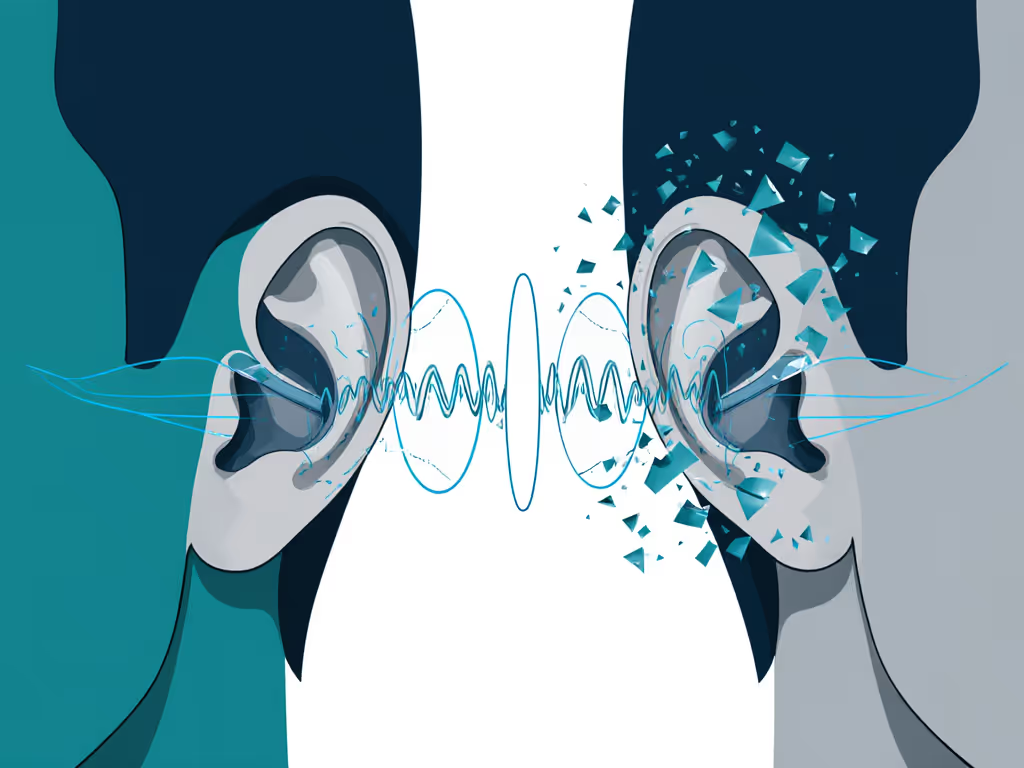
In studio tests, switching tips on a single IEM model (using a balanced armature driver) shifted its frequency response more dramatically than swapping between driver types. This isn't anecdotal, it's measurable physics. Fit writes the frequency plot before any EQ matters.
Your Action Plan: Prioritize Seal Over Specs
Step 1: Test Your Seal Objectively
- The bass test: Play a 100Hz tone (or a bass-heavy track like Billie Eilish's "Happier Than Ever"). Tilt your head; if volume drops, seal is breaking.
- The finger test: Gently press your ear upward (like putting in earrings). If bass tightens instantly, your fit is shallow.
Step 2: Match Tips to Your Anatomy
- Shallow canal? Use triple-flange or "anatomy-fit" tips (e.g., Comply Foam's WF series).
- Wiry ear hair? Try textured silicone tips (e.g., SpinFit CP100) that grip without foam compression.
- Asymmetric ears? Mix tip types (e.g., foam left, silicone right) rather than forcing symmetry.
Step 3: Re-evaluate "Driver Quality" Claims
Ask:
- Does this product provide seal customization (e.g., 5+ tip sizes), or just claim "premium drivers"?
- Are seal-dependent features (ANC, transparency mode) tested with my ear shape?
- Does the reviewer measure response with seal intact, or just parrot spec sheets?
Conclusion: Rethinking Your Earbud Strategy
The next time you research earbud driver technology, invert the conversation. Instead of "Which driver type delivers the best bass?" ask: "How does this product ensure my seal is consistent?" For wireless earbuds, driver architecture is irrelevant without the foundation seal creates. Whether you're using a dynamic driver earbud for workouts or a balanced armature model for studio monitoring, seal before EQ is the non-negotiable first law of sound accuracy.
Don't gamble on anatomy. Protect your hearing while you optimize fit with our safe listening guide. Next time you put in your earbuds, run the 10-second bass test, then judge the driver's real performance. You'll hear why fit isn't just comfort; it's the blueprint of your sound. Ready to test your seal's impact? Grab any multi-tip kit and compare foam vs. silicone on a bass track. The difference isn't subtle, it's physics in action.
Related Articles