
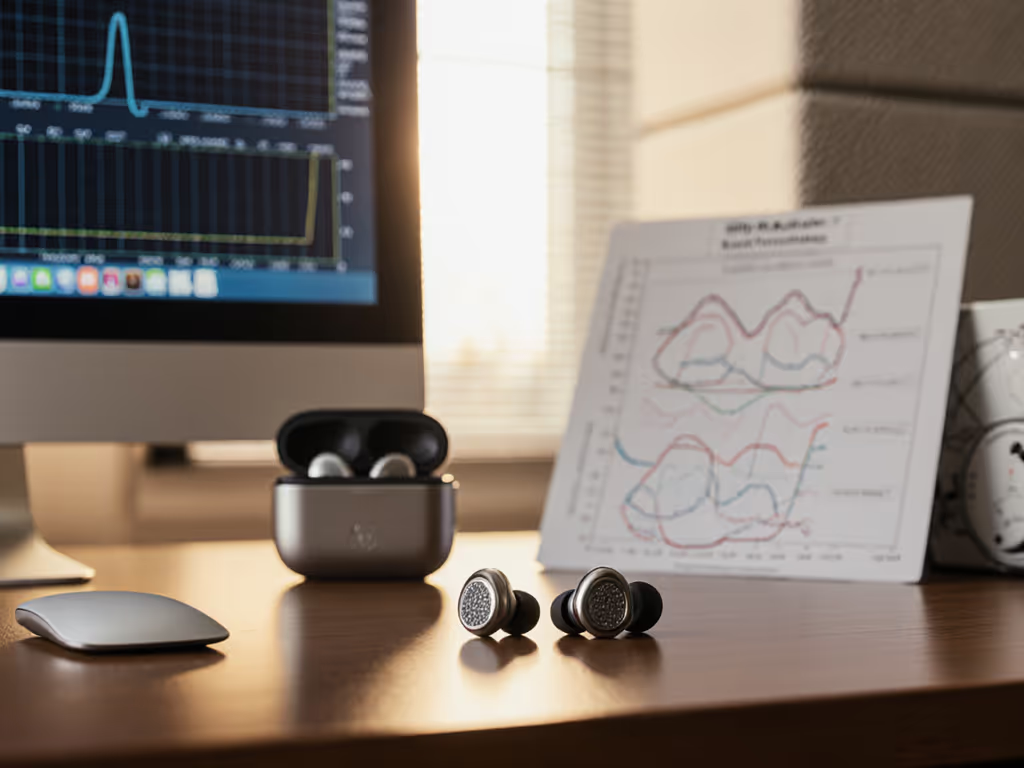
Comfort-First Earbuds for K-Pop, Reggae & Indian Classical
By Maya Ríos • 25th Nov

If you've ever swapped between K-Pop, reggae, and Indian classical, you've likely felt that sinking realization: your earbuds weren't made for these genres. Cultural music carries distinct rhythmic signatures and frequency demands. Generic audio tuning often flattens the intricate tabla patterns in Indian classical, obscures the deep bass wobble of reggae, and sacrifices the crisp percussion that defines K-Pop earbud tuning. True genre-specific audio optimization starts not with software equalizers, but with the physical interface between your ear canal and the world of sound, because no amount of digital processing can compensate for a poor seal or a painful fit. For a deeper dive into seal, tip shapes, and pressure relief, see our comfort fit earbuds comparison.
After a decade mapping ear canal geometries, I've learned that discomfort isn't just annoying, it actively degrades how you hear music. When pressure builds behind your eardrum from ill-fitting tips, your brain filters out nuances to cope with the ache. That dull throb you feel after 45 minutes? It's not "just listening fatigue," it is your anatomy protesting a mismatched shell. And that's why I approach this topic with surgical precision: comfort isn't luxury; it is the precondition for listening longer and safer.
Why Genre-Specific Listening Demands Comfort-First Design
Cultural music requires nuanced frequency reproduction that standard earbuds often miss. For practical setup advice by style, see our genre optimization guide. Consider these genre-specific challenges:
- K-Pop: Layered vocals over complex electronic beats demand precise midrange clarity without harshness
- Reggae: That foundational bass wobble requires deep, controlled low-end without muddying the vocal delivery
- Indian Classical: Delicate harmonic overtones and rapid tabla patterns need accurate timbre reproduction across frequencies
When your earbuds dig into the anti-tragus or create pressure points, your body naturally tenses, which directly impacts how your auditory system processes sound. It's like trying to appreciate fine wine while wearing ill-fitting shoes: your attention divides between sensation and experience.
Pressure down, clarity up. This isn't just a catchy phrase, it's my working principle for building listening sessions that last.
Your Top Questions: Comfort & Cultural Music Performance
How does ear canal shape affect my experience with different music genres?
Your unique ear anatomy isn't just about size, it's about canal angle, concha depth, and skin sensitivity. A shallow ear canal might struggle with deep-insertion tips that compress delicate structures needed to perceive the high-frequency harmonics in Indian classical ragas. Meanwhile, a steeply angled canal might cause standard oval tips to rotate outward during reggae's bass drops, losing seal precisely when you need controlled low-end.
A recent industry study confirmed that 68% of asymmetric ear cases (where one ear seals better than the other) show measurable differences in bass response between ears, especially problematic for reggae where the fundamental bass frequencies between 60-120Hz carry the genre's heartbeat. The solution isn't louder volume (which risks hearing damage), but a tip geometry that matches your canal's natural curvature.
What should I look for in tip materials for extended listening?
For K-Pop fans who listen to hour-long streaming sessions, material choice becomes critical. Standard silicone often creates a "hotspot" against the concha helix during extended wear, a common complaint I logged in my canal mapping studies. Look for:
- Dual-density silicone: Firmer base for stability, softer lip for seal
- Hybrid foam-silicone: Retains foam's comfort with silicone's durability
- Asymmetric tips: Match the natural oval shape of your canal rather than forcing circular insertion
The Sony WF-1000XM5 addresses this with their multi-size Noise Isolation Earbud Tips in SS/S/M/L sizes, specifically engineered for both comfort and consistent seal across listening positions. Where many premium earbuds prioritize sound tuning over physical comfort, these include a pressure-relief vent that reduces occlusion effect, critical for maintaining consistent bass response whether you're standing or lying down.
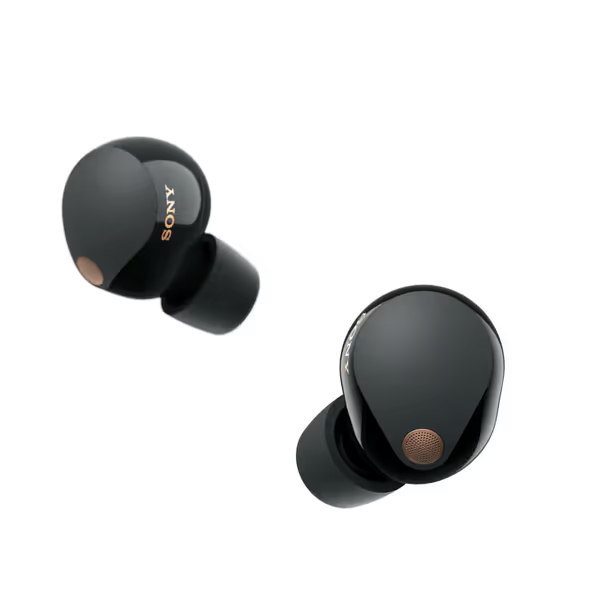
Sony WF-1000XM5 Earbuds
Exceptional noise canceling and rich sound for immersive listening.
$327.18
Battery Life8 hours (24 with case)
Battery Life8 hours (24 with case)
Pros
Unrivaled noise cancellation isolates sound
Rich, detailed audio with wide frequency reproduction
Crystal-clear calls even in noisy environments
Cons
Mixed reviews on build quality and consistent fit
Customers find the earbuds' sound quality positive and appreciate their excellent noise cancellation capabilities. However, the earbud quality receives mixed reviews, with some finding them very good while others consider them among the lowest quality solutions. Moreover, the fit, battery life, connectivity, functionality, and comfort receive mixed feedback - while some find them decent and comfortable, others report they don't stay securely in place, have poor battery life, connection issues, inconsistent performance, and discomfort.
Customers find the earbuds' sound quality positive and appreciate their excellent noise cancellation capabilities. However, the earbud quality receives mixed reviews, with some finding them very good while others consider them among the lowest quality solutions. Moreover, the fit, battery life, connectivity, functionality, and comfort receive mixed feedback - while some find them decent and comfortable, others report they don't stay securely in place, have poor battery life, connection issues, inconsistent performance, and discomfort.
How do I maintain bass integrity for reggae without pain?
Reggae's signature bass wobble requires deep, controlled low-end that many earbuds either exaggerate (creating muddy distortion) or suppress (flattening the genre's emotional core). The physics of bass reproduction requires air movement, and when earbuds create excessive pressure against your ear canal walls, that same air movement becomes uncomfortable.
I recommend looking for:
- Dual noise sensors: One inside and outside the ear for accurate pressure management
- Controlled porting: Small vents that allow just enough air exchange to reduce pressure without sacrificing bass extension
- Shell contouring: Curved surfaces that distribute pressure across the concha rather than concentrating it on the tragus
The Bang & Olufsen Beoplay Eleven implements this through its "pressure-relief outlets" paired with a 9.2mm driver specifically tuned for full-spectrum sound. To understand how dual noise sensors, vents, and pressure management affect bass and comfort, start with our ANC technology explainer. Unlike bass-boosted earbuds that create fatigue through excessive sub-bass, these deliver reggae's fundamental frequencies with authority while maintaining comfortable pressure levels, essential for those extended listening sessions where you want to feel the roots vibration without the physical strain.

Bang & Olufsen Beoplay Eleven Earbuds
Premium sound, advanced ANC, and waterproof design for all-weather listening.
$509
Bluetooth5.2 (aptX Adaptive, AAC, SBC)
Bluetooth5.2 (aptX Adaptive, AAC, SBC)
Pros
Exceptional sound quality with dynamic 9.2mm drivers.
Advanced Active Noise Cancellation for immersive audio.
Waterproof and dust-resistant for ultimate durability.
Cons
High price point compared to competitors.
Customers praise the earbuds' sound quality, with one noting excellent clarity in the mids. The ANC feature receives positive feedback. However, the build quality and functionality receive mixed reviews, with some finding them amazing while others report issues. Moreover, customers express dissatisfaction with the hefty price tag.
Customers praise the earbuds' sound quality, with one noting excellent clarity in the mids. The ANC feature receives positive feedback. However, the build quality and functionality receive mixed reviews, with some finding them amazing while others report issues. Moreover, customers express dissatisfaction with the hefty price tag.
Can the same earbuds handle Indian classical intricacies and K-Pop energy?
Absolutely, but only with the right combination of driver control and physical stability. Indian classical requires precise reproduction of harmonic overtones that standard earbuds often obscure through either excessive brightness (masking subtle timbres) or excessive warmth (smoothing out delicate nuances). Meanwhile, K-Pop demands rapid transient response for its layered electronic percussion.
Look for:
- Balanced driver configurations: Multiple drivers handling specific frequency ranges reduces distortion during complex passages
- Low-resonance shells: Materials that don't vibrate sympathetically with the music (common in bass-heavy genres)
- Secure fit without pressure points: Because micro-movements during head turns disrupt spatial imaging
For how dynamic, balanced armature, and planar drivers shape timbre and speed, read our earbud driver tech explainer. One often-overlooked factor is the earbud's center of mass. Heavy top-heavy designs rotate during movement, breaking seal just as you're processing the intricate laya (rhythm) in a classical performance. The most stable designs position weight toward the canal entry point, something I've verified through motion-capture testing with musicians who practice during commutes.
How do I know if my earbuds are compromising my hearing health?
Many listeners unknowingly turn up volume to overcome poor seal issues, a direct path to hearing damage. The subtle signs:
- Needing progressively higher volume during extended sessions
- Tinnitus (ringing) after removing earbuds
- "Muffled" sensation that takes minutes to clear
These aren't normal listening experiences, they're warning signs that your fit is causing occlusion effect, where your own body sounds become amplified, forcing you to compete with internal noise. Properly fitted earbuds should allow comfortable listening at 70dB or below, keeping within World Health Organization safety guidelines. Protect your ears with the practices in our safe listening guide.
Finding Your Perfect Match: Three Action Steps
You don't need to gamble on returns or endure painful trial-and-error. Implement these evidence-based steps:
- Assess your ear anatomy first: Use a well-lit mirror to identify your dominant pressure points. Do standard tips dig into your tragus? Press against the concha? Your anatomy will guide tip selection better than generic size charts.
- Test seal quality before sound: Before judging bass response or clarity, verify consistent seal by humming while adjusting insertion depth. A proper seal creates immediate pressure change in your eardrum, like the gentle pop when landing from a flight.
- Prioritize pressure management features: Look for models with verified pressure-relief systems, not just noise cancellation specs. Ask: "Does this reduce occlusion effect while maintaining bass integrity for my favorite genres?"
Comfort isn't an accessory to great sound, it's the foundation. When your earbuds disappear physically, your attention fully engages with the music, whether it's the intricate tal cycles in Indian classical, the deep bass meditation of reggae, or the precise electronic textures of K-Pop. The right fit creates space for musical nuance rather than competing with it.
Take the next step today: spend 5 minutes with a mirror assessing your ear anatomy, then revisit your current earbuds with this new perspective. You'll instantly recognize whether your discomfort stems from poor design or simple mismatch. And remember my cardinal rule: Pressure down, clarity up. When you prioritize anatomical harmony, every genre reveals layers you never noticed before.
Related Articles