Anatomy-First Audio Personalization: Earbud Comfort Comparison
By Maya Ríos • 29th Oct

As an ergonomics researcher who's mapped hundreds of ear canals, I've learned that true audio personalization comparison begins not with sound specs, but with the delicate geometry of your ear. When adaptive sound technologies meet your unique anatomy, that's where listening transforms from tolerable to transcendent. Comfort isn't a luxury, it's the precondition for longer listening. Let's explore how to match technology to your biology.
Pressure down, clarity up.
Why does my earbud discomfort happen even with "premium" models?
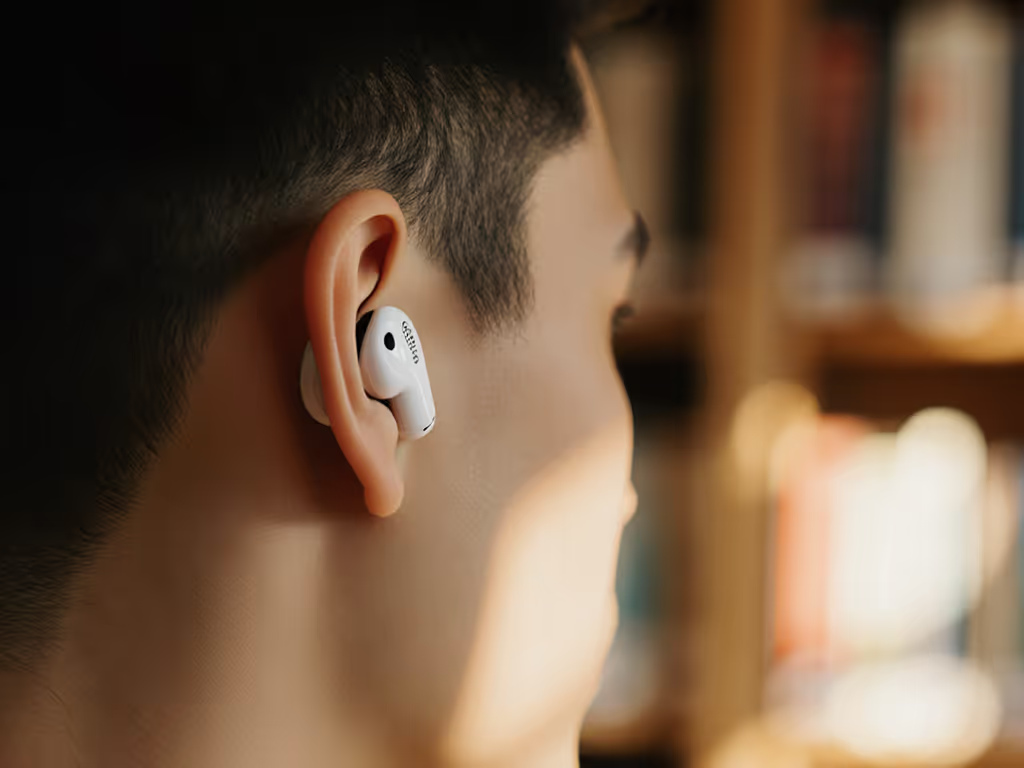
That dull ache after 30 minutes? It's not in your head, it's in your anatomy. Your ear canal isn't a smooth tube but a complex, tapered passage with individual bends, angles, and tissue sensitivity. When standard earbuds force a one-size-fits-all seal, they create pressure points at the tragus, anti-tragus, or concha, like wearing shoes three sizes too narrow. I know this intimately: after a long-haul flight, that familiar tight-shoe ache in my ears sparked my research into canal angles and pressure mapping. If comfort is your main issue, see our comfort and fit comparison guide for designs that ease pressure without sacrificing seal.
What most reviews miss is that adaptive noise cancellation and personalized spatial audio systems actually depend on a perfect seal to function correctly. Poor fit doesn't just cause discomfort (it sabotages the very technologies you're paying for). The bass thins out, ANC becomes inconsistent, and spatial audio cues get distorted because sound leakage disrupts the precise acoustic environment these systems require.
How do head tracking earbuds interact with fit stability?
Spatial audio with head tracking creates immersive experiences by adjusting sound direction as you move your head. But this sophisticated technology requires extraordinary stability in the ear. If your earbuds shift even slightly during movement (common with asymmetric ears), the head tracking loses calibration, breaking the illusion.
From analyzing canal geometries, I've found that successful head tracking earbuds share three critical fit features:
- Center of mass alignment with your concha bowl (reduces rotation during movement)
- Nozzle angle matching your ear canal's natural tilt (typically 15-30 degrees forward)
- Shell profile that follows anti-helix contours without protruding
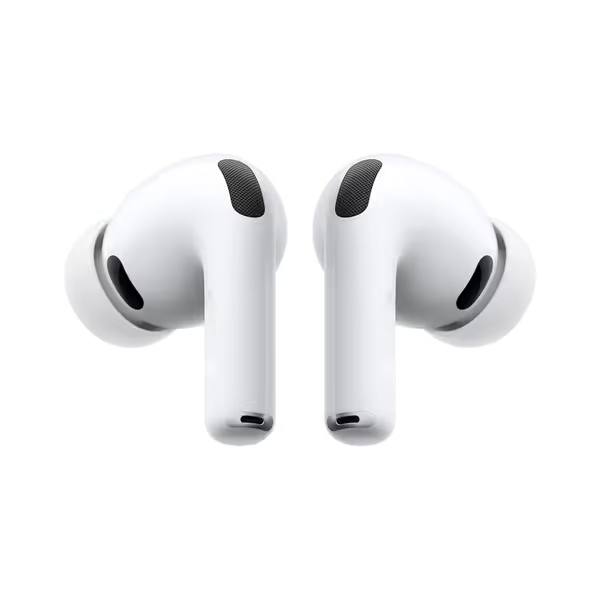
This is where anatomy-first design separates the contenders from the pretenders. The Apple AirPods Pro 3's multi-sized tip system (
Apple AirPods Pro 3 Wireless Earbuds
Unrivaled ANC & spatial audio with intelligent health and translation features.
$249
Active Noise CancellationUp to 2x more noise reduction
Active Noise CancellationUp to 2x more noise reduction
Pros
Exceptional ANC and immersive Spatial Audio
Heart Rate Sensing & Live Translation features
Personalized, secure fit with 5 ear tip sizes
Cons
Fit and comfort can be mixed for some users
Customers find these wireless earbuds worth upgrading, with excellent battery life and superior sound quality, particularly noting the tight bass and spatial audio capabilities. The noise cancellation is amazing, with one customer mentioning it provides good hearing protection, and the earbuds fit deeply in the ears. Comfort and functionality receive mixed reviews - while some find them comfortable and working well, others report discomfort and limited functionality. The ear retention is also mixed, with some customers reporting they stay firmly in place while others find them uncomfortable.
Customers find these wireless earbuds worth upgrading, with excellent battery life and superior sound quality, particularly noting the tight bass and spatial audio capabilities. The noise cancellation is amazing, with one customer mentioning it provides good hearing protection, and the earbuds fit deeply in the ears. Comfort and functionality receive mixed reviews - while some find them comfortable and working well, others report discomfort and limited functionality. The ear retention is also mixed, with some customers reporting they stay firmly in place while others find them uncomfortable.
) addresses this with five tip sizes including XXS, a rarity for small-ear users. Their inward-facing microphones don't just monitor sound; they verify seal integrity in real-time, adjusting the adaptive sound technologies accordingly.
What makes custom EQ technologies anatomy-dependent?
That "perfect" EQ setting you found online? It's probably wrong for your ears. Why? Because custom EQ technologies must account for how sound waves interact with your specific ear shape (a process called Head-Related Transfer Function (HRTF) filtering). As ScienceDaily explains, "Everyone's ears are unique, so the imprint of one person's anatomy on a sound is completely different from that of another."
| Personalization Method | Accuracy | Comfort Impact |
|---|---|---|
| Generic HRTF database | Low | May create pressure trying to compensate |
| Ear canal scanning apps | Medium | Better fit, but limited by phone mic quality |
| Physical tip customization | High | Directly addresses pressure points |
| Real-time seal monitoring | Highest | Adjusts sound and pressure dynamically |
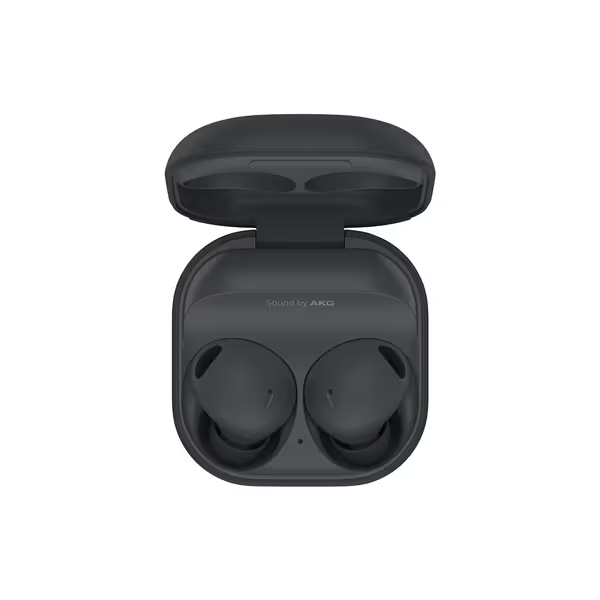
True audio personalization comparison requires understanding that sound customization is inseparable from physical fit. For a deeper look at why seal and driver design shape accuracy, read our earbud driver technology explainer. The Samsung Galaxy Buds2 Pro (
Samsung Galaxy Buds2 Pro
Next-level Hi-Fi audio with intelligent ANC and comfortable fit.
$149.99
Water ResistanceIPX7
Water ResistanceIPX7
Pros
Immersive Hi-Fi audio with 360 sound.
Powerful Active Noise Cancellation drowns out distractions.
Seamless Galaxy device integration and real-time translation.
Cons
Fit and comfort can be inconsistent for some.
Customers find these earbuds to be high quality with great noise cancellation and sound quality. The fit and comfort receive mixed feedback - while some find them exceptionally comfortable, others report they hurt after prolonged use. The battery life and functionality also get mixed reviews, with some praising the phenomenal battery life while others report charging issues, and some saying they work well while others say they stopped working entirely. Several customers mention the buds keep falling out of their ears.
Customers find these earbuds to be high quality with great noise cancellation and sound quality. The fit and comfort receive mixed feedback - while some find them exceptionally comfortable, others report they hurt after prolonged use. The battery life and functionality also get mixed reviews, with some praising the phenomenal battery life while others report charging issues, and some saying they work well while others say they stopped working entirely. Several customers mention the buds keep falling out of their ears.
) tackle this with their 360 Audio technology that adapts to individual anatomy, but require a stable seal to function properly, a reminder that comfort enables personalization, not the other way around.

How can I test if my earbuds create unhealthy pressure?
Forget decibel meters (your body is the best diagnostic tool). Perform this 60-second comfort audit:
- The Tug Test: Gently pull down on your earlobe. If sound quality changes significantly, your seal is pressure-dependent rather than anatomically matched.
- The Yawn Check: Open your mouth wide. Do bass frequencies drop out? This indicates the tip is pressing against your concha, blocking the ear canal during jaw movement.
- The 20-Minute Rule: Wear them while reading (not music). If you notice any pressure awareness, it's already too much for healthy long sessions.
Comfort-first designs incorporate venting strategies that reduce occlusion effect (the "helmet head" sensation that causes dizziness and fatigue). Look for models with passive vents or acoustic channels that equalize pressure while maintaining seal integrity.
Why do asymmetric ears make finding the right fit so difficult?
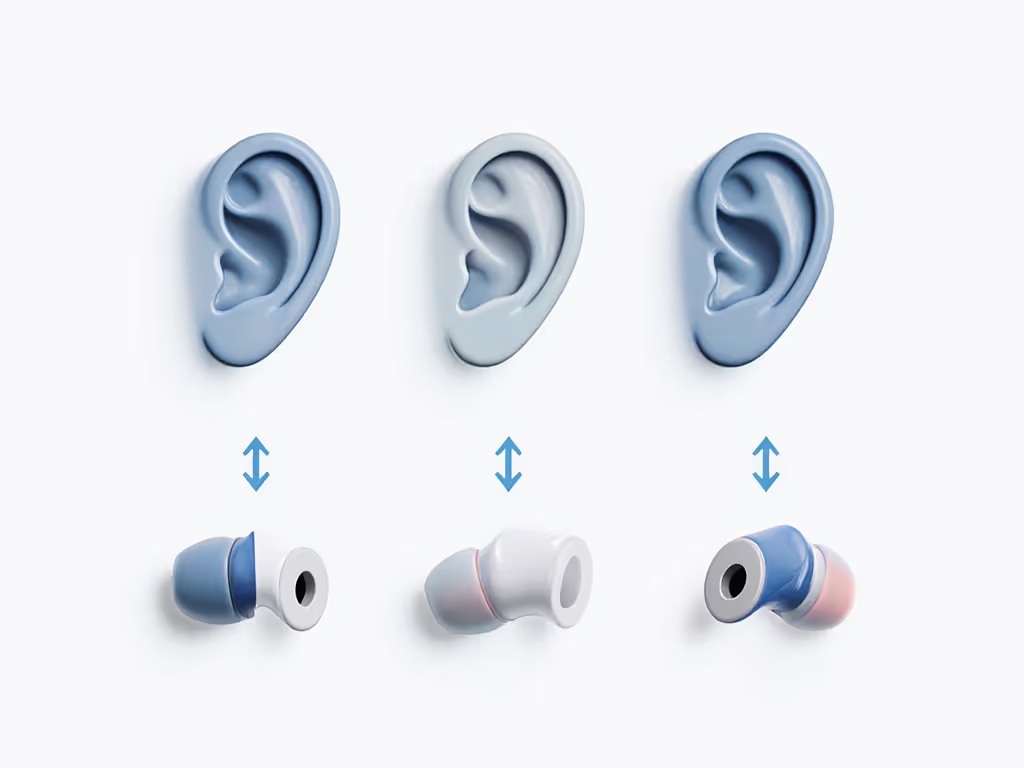
Nearly 70% of people have noticeably different ear canal shapes between left and right ears, a fact rarely addressed in mainstream reviews. When one side seals perfectly while the other won't, it's not user error; it's anatomy variance that requires individualized solutions.
For asymmetric ears, consider:
- Mixed tip sizes: Using different tip sizes per ear (e.g., XS left, S right)
- Hybrid tip materials: Silicone on one side, foam on the other to address varying canal textures
- Asymmetric stabilization: Fins or wings on only the problematic side
I've documented cases where users finally achieved comfort after years of frustration simply by mixing tip materials, a solution buried in forums but absent from official guidance. The "S/M/L" tip paradigm fails because canal length, width, and angle vary independently between ears.
How do I evaluate adaptive sound technologies for comfort?
When comparing adaptive noise cancellation systems, look beyond decibel reduction specs. True comfort-focused ANC:
- Dynamically adjusts based on seal quality (not just environment)
- Reduces low-frequency pressure buildup that causes fatigue
- Maintains transparency without requiring physical adjustments that break seal
During testing, pay attention to the transition between ANC modes. Abrupt changes often indicate the system is compensating for poor fit rather than genuinely adapting. The best implementations feel seamless because they're working with your anatomy, not fighting it.
What's the actionable first step for finding my ideal fit?
Stop guessing. Implement this anatomy-first evaluation protocol before your next purchase:
- Map your ear shape: Take a well-lit photo of your ear profile against a dark background
- Identify your pressure points: Note where discomfort occurs with current buds
- Measure your canal angle: Use a flexible cable to trace your canal path (safely!) and compare to product specs
- Prioritize tip ecosystem: Choose brands offering at least 4 sizes with documentation of nozzle angle
For small-ear users, the AirPods Pro 3's XXS tips provide unprecedented shallow insertion options. For active users needing stability, the Galaxy Buds2 Pro's ergonomic shell design minimizes shifting during movement. See our workout earbuds picks tested for secure fit and comfort during training. But remember, no technology compensates for fundamental anatomical mismatch.
The real promise of audio personalization comparison
After years mapping ear canals and pressure patterns, I've concluded that the most advanced adaptive sound technologies are meaningless without anatomical harmony. True personalization isn't just about tailoring sound to your preferences, it's about designing sound delivery that respects your biology.
When you find that perfect match where the earbud disappears behind the experience? That's when audio transforms from something you do to something you inhabit. Pressure down, clarity up, but only when your comfort comes first.
Related Articles