

Your Personality Type's Ideal Earbuds Matched
By Lina Kovács • 16th Dec
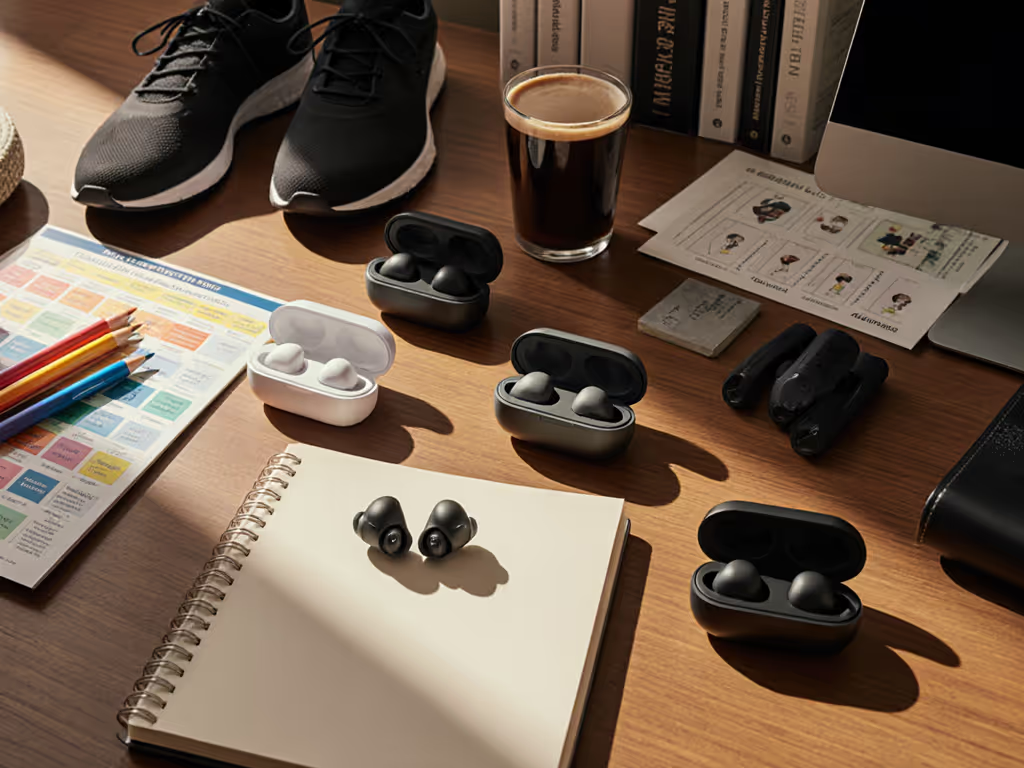
What if your ideal earbuds could be determined by your personality? Through personality-based earbud selection, we can move beyond one-size-fits-all recommendations to matches that align with both your psychological profile and acoustic needs. Recent research reveals fascinating connections between temperament and what we actually want from our audio gear, connections that form the foundation of true temperament tech matching. Data, then taste: this isn't about subjective preferences alone, but how your neurological wiring shapes your auditory expectations. Your personality doesn't just determine what music you stream, it affects how you experience sound itself, and, crucially, what fit and features will deliver satisfaction.
The Science Behind Personality and Audio Preferences
Research across multiple studies confirms what audiophiles have suspected: your personality traits strongly correlate with your audio preferences. A landmark study examining over 3,500 participants worldwide revealed four consistent music dimensions tied to personality: Reflective & Complex, Intense & Rebellious, Upbeat & Conventional, and Energetic & Rhythmic. These dimensions map directly to the Big Five personality traits that psychologists use to understand individual differences.
Fit writes the frequency plot before any EQ matters.
This isn't just about genre preference, it's about how your brain processes sound. For the physics behind seal and response curves, see how earbud seal shapes testing. Openness to experience, for instance, strongly correlates with preference for acoustic complexity and dynamic range (ρ = 0.284). People scoring high in openness don't just prefer jazz, they need the subtle harmonic decay that complex compositions provide. Meanwhile, extraversion connects to preference for higher energy and rhythmic consistency in music, while neuroticism often aligns with music expressing negative emotions and intensity.
How Personality Shapes Technical Needs
When we move from music selection to hardware requirements, these psychological patterns translate into specific technical needs:
- Openness to Experience: Needs accurate timbre reproduction and wide dynamic range to appreciate musical nuance
- Extraversion: Prioritizes consistent bass response and rhythmic precision for energetic music
- Conscientiousness: Values reliability, stable fit, and consistent performance across environments
- Agreeableness: Prefers balanced tuning without extreme frequencies that might feel confrontational
- Neuroticism: Often seeks strong isolation to create emotional safety through sound
These connections explain why generic "best earbuds" lists fail so many listeners. An analytical personality might reject "warm" tuning as indistinct, while an intuitive listener might find neutral tuning sterile. The mismatch isn't about the earbuds' quality, it's about whether they align with how your brain processes sound.
Personality Profiles and Their Perfect Earbud Matches
The Analytical Thinker: Precision Seekers
If you're highly analytical, you likely prefer clear separation between instruments, accurate timbre, and transparent tuning. You probably notice phase issues that others miss and become frustrated by "smearing" in complex passages. Research shows analytical thinkers often score high in openness to experience, which correlates with preference for acoustic complexity.
Your ideal earbud features:
- Neutral or reference tuning profile
- Consistent seal across tip sizes (critical for frequency accuracy)
- Minimal resonance in the shell
- Detailed mids and highs without artificial brightness
- Low distortion at all volumes
Fit first consideration: Analytical listeners often struggle with inconsistent seal because minor variations dramatically affect what they perceive as "accuracy." One side sealing better than the other creates phantom imaging issues that feel physically uncomfortable to detail-oriented listeners.
The Intuitive Feeler: Emotional Experience Seekers
Intuitive personalities typically prioritize emotional resonance over technical precision. They're more likely to enjoy "colored" tuning that enhances musical expression, even if it deviates from neutrality. Research connects this profile to preference for valence, how positive or negative the music feels, as much as technical characteristics.
Your ideal earbud features:
- Tuning with emotional emphasis (slight bass boost or vocal presence)
- Natural decay and reverb reproduction
- Comfort for extended listening sessions
- Good isolation to enhance emotional immersion
- Seamless transition between frequencies
Fit first consideration: For intuitive listeners, a poor seal doesn't just affect bass response, it disrupts the emotional continuity of the music. When low frequencies leak, the foundational emotional texture disappears, making music feel disconnected.
The Extroverted Socializer: Rhythm and Connection
Extroverts often prefer music with strong rhythmic components and consistent energy. Studies confirm extraversion correlates with preference for upbeat and energetic genres. Their earbud needs reflect this: they want reliable wireless connectivity for social settings, strong bass response for rhythmic music, and microphone quality for frequent calls. If you juggle phones and laptops, our seamless device switching tests show which earbuds handle multipoint reliably.
Your ideal earbud features:
- Consistent bass response (requires stable seal during movement)
- Excellent microphone array for clear calls
- Reliable multipoint connectivity
- Secure fit for active use
- Quick access to transparency mode
Fit first consideration: Extroverts often face the "fitness paradox": buds that sound great stationary but lose seal during social movement. The bass response collapse when a bud shifts isn't an equipment failure; it's physics: no seal, no bass, regardless of driver quality.
The Introverted Contemplator: Quiet Complexity
Introverts often prefer music with subtle complexity and dynamic range. Research shows they're more likely to listen at moderate volumes for longer durations and value hearing detail without distortion. Their ideal earbuds must deliver nuanced performance without fatigue.
Your ideal earbud features:
- Natural decay characteristics
- Low harmonic distortion
- Comfort for extended wear
- Precise isolation without pressure build-up
- Neutral to slightly warm tuning
Fit first consideration: Introverts often experience discomfort from even minor pressure points during long sessions. For long sessions, see our comfort fit earbuds comparison for designs that minimize pressure and fatigue. The occlusion effect (that "in-your-head" sound) becomes particularly disturbing when seeking quiet contemplation, yet many "comfort-focused" buds worsen this by creating excessive seal pressure.
The Fit Factor: Why Your Personality Can't Overcome Physics
All these personality considerations become irrelevant without proper fit. In a studio quiet as snowfall, I've watched frequency response curves smooth where a leak had carved a canyon. That visual clicked with what I heard: fit writes the frequency plot. Since then, I tune with seal first, then EQ, because you can't equalize what isn't reaching you.
Your personality might make you prefer certain frequencies, but physics determines what frequencies actually reach your eardrum. A poor seal:
- Creates significant bass attenuation (often 15-20dB in the low frequencies)
- Introduces comb filtering that creates unpredictable peaks and nulls
- Makes ANC performance inconsistent and often counterproductive
- Causes dynamic range compression as the system compensates
This explains why introverts might think they "hate bass" when they actually have chronic seal issues. It's why analytical listeners become frustrated with "inconsistent" performance, it's the seal varying between listening sessions, not the earbuds malfunctioning.
Practical Guide to Personality-Based Matching
Step 1: Identify Your Primary Listening Motivation
Before choosing earbuds, clarify your primary motivation:
- Analytical users: "I want to hear exactly what's in the recording"
- Intuitive users: "I want to feel the emotional content of the music"
- Extroverted users: "I want reliable performance for social and active use"
- Introverted users: "I want comfort for extended, immersive listening"
Step 2: Prioritize Fit Characteristics Over Features
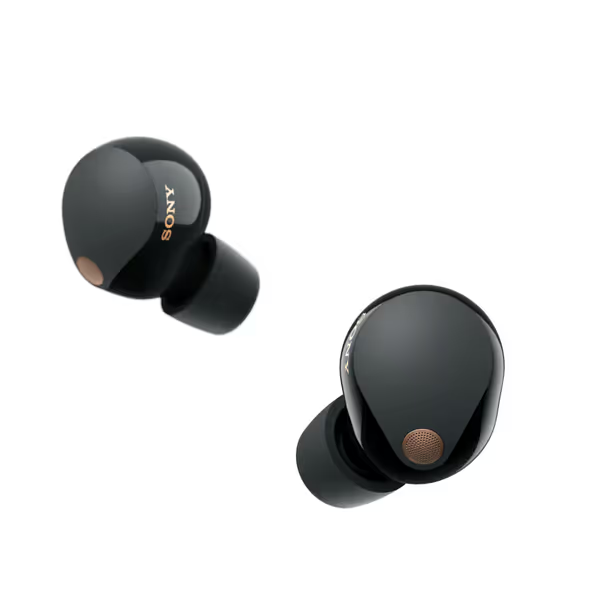
Sony WF-1000XM5 Earbuds
Exceptional noise canceling and rich sound for immersive listening.
$327.18
Battery Life8 hours (24 with case)
Battery Life8 hours (24 with case)
Pros
Unrivaled noise cancellation isolates sound
Rich, detailed audio with wide frequency reproduction
Crystal-clear calls even in noisy environments
Cons
Mixed reviews on build quality and consistent fit
Customers find the earbuds' sound quality positive and appreciate their excellent noise cancellation capabilities. However, the earbud quality receives mixed reviews, with some finding them very good while others consider them among the lowest quality solutions. Moreover, the fit, battery life, connectivity, functionality, and comfort receive mixed feedback - while some find them decent and comfortable, others report they don't stay securely in place, have poor battery life, connection issues, inconsistent performance, and discomfort.
Customers find the earbuds' sound quality positive and appreciate their excellent noise cancellation capabilities. However, the earbud quality receives mixed reviews, with some finding them very good while others consider them among the lowest quality solutions. Moreover, the fit, battery life, connectivity, functionality, and comfort receive mixed feedback - while some find them decent and comfortable, others report they don't stay securely in place, have poor battery life, connection issues, inconsistent performance, and discomfort.
No matter your personality type, these fit elements trump all others:
- Nozzle angle matching your ear canal (most people need 15-20 degrees)
- Shell footprint that doesn't contact your concha
- Tip compression ratio appropriate for your canal size
- Center of mass that doesn't rotate during movement
The Sony WF-1000XM5 offers an excellent case study. Their slightly forward-angled nozzle works well for analytical listeners who need precise imaging, while their multiple tip sizes accommodate various canal geometries. However, their relatively large shell footprint makes them less ideal for small-ear users seeking introvert-friendly comfort, demonstrating how even premium products serve specific personality/fit combinations better than others.
Step 3: Match Personality to Tuning Approach
Once you've secured proper fit, then consider tuning:
- Analytical listeners should seek neutral tuning and avoid excessive EQ
- Intuitive listeners might benefit from subtle bass boosts (3-5dB below 100Hz)
- Extroverted listeners often prefer consistent bass response over absolute neutrality
- Introverted listeners typically appreciate slightly warm tuning for fatigue-free listening
Remember: EQ can't fix what physics prevents. Your Bluetooth chain also shapes clarity and latency—see our audio codecs explained breakdown. You can't boost bass that isn't there because of a leaky seal.
Finding Your Perfect Match
Personality-based earbud selection recognizes that technology must serve the human, not the reverse. Your neurological wiring shapes what you hear as "good sound," but physics determines what sound actually reaches your eardrum. The most sophisticated algorithms can't compensate for fundamental acoustic principles.
When evaluating options, prioritize:
- Fit metrics over brand reputation
- Seal consistency across your daily activities
- Tuning alignment with your neurological preferences
- Feature utility that matches your routine
The next time you're frustrated with "disappointing" earbuds, consider whether the issue is your fit rather than your preferences. What you perceive as a tuning flaw might simply be physics reminding you that seal comes first.
Data, then taste. Your personality informs what you want to hear, but your anatomy determines what you actually can hear. By understanding both, you can move beyond trial-and-error toward earbuds that truly match who you are.
Further Exploration
Ready to find your personality-perfect match? Test your current earbuds with this simple exercise: play a track with consistent bass notes while gently pressing the earbud deeper into your ear. If the bass changes significantly, you've got a seal issue, not a tuning problem. For deeper analysis of how your specific ear anatomy affects sound, try measuring your own frequency response with a calibrated microphone. The path to perfect sound begins with understanding your unique physiology before considering personality (or brand hype).
Related Articles