Best Audiobook Earbuds: Fit and Voice Clarity Guide
By Lina Kovács • 8th Apr
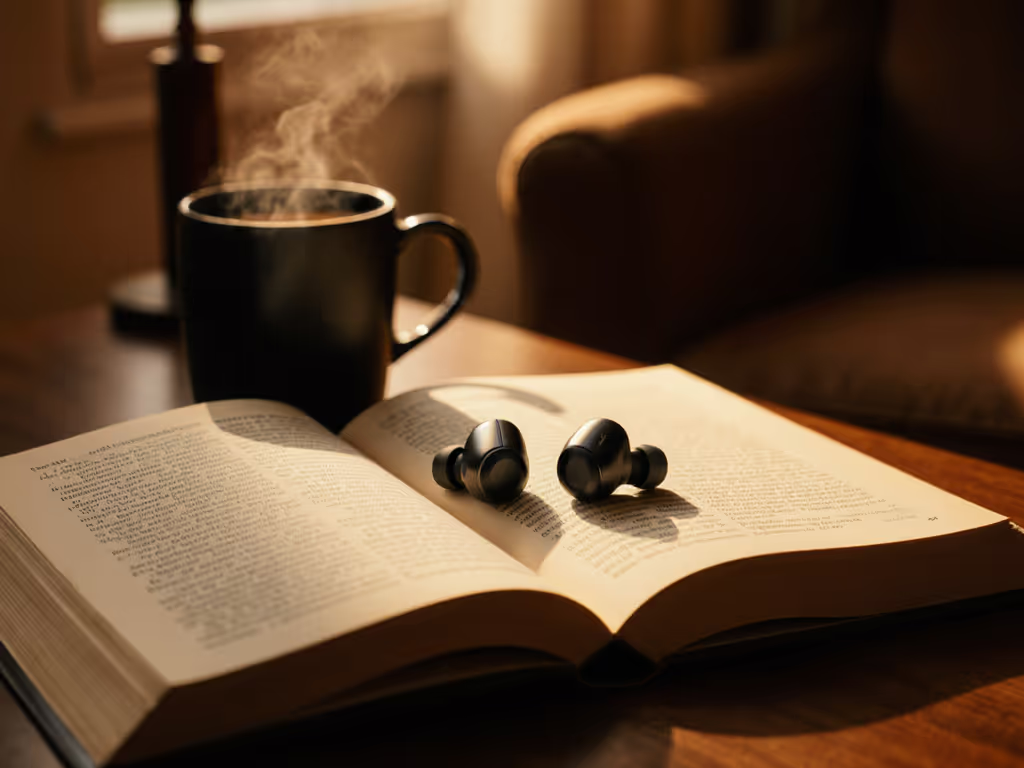
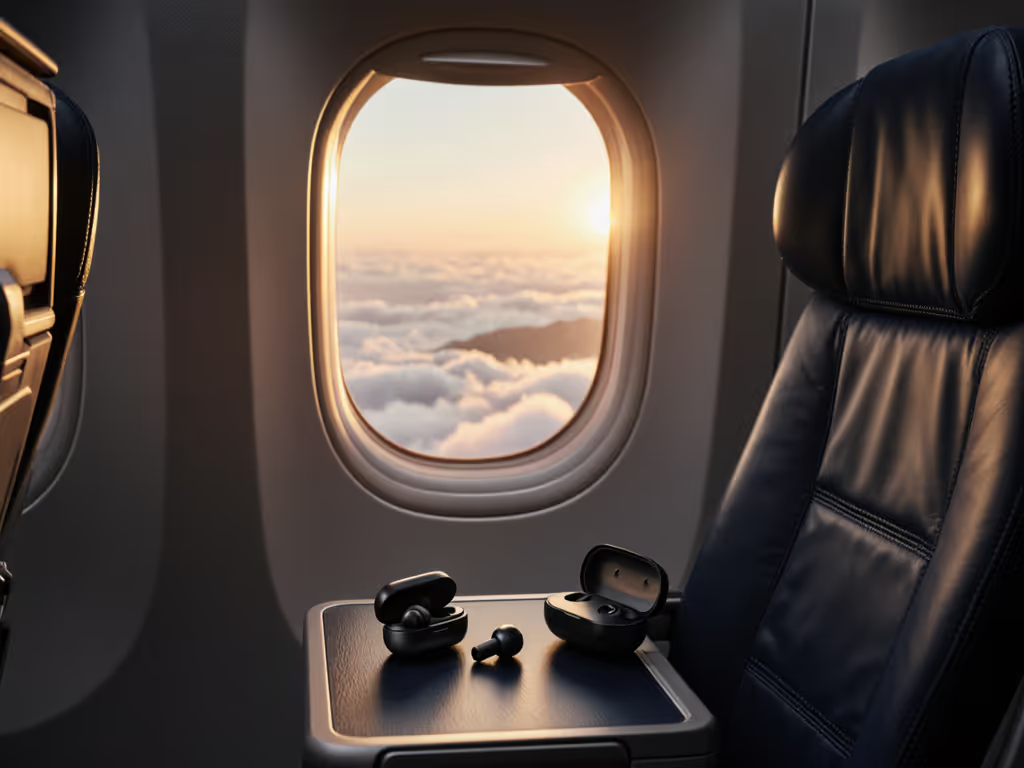
Audiobook listening earbuds and long-form spoken content earbuds demand something different from what music-centric reviews celebrate. You're not shopping for bass thump or treble sparkle; you're hunting for clarity, stability over hours, and a seal that doesn't betray you at page 200 of a 400-page narration. The gap between "good earbuds" and "good audiobook earbuds" lives in the midrange frequencies where voice lives, the ergonomics that survive eight-hour road trips, and the seal architecture that doesn't require constant re-seating. This guide separates the functional from the fragile by grounding every recommendation in how fit mechanics drive the sound you actually hear.
Why Fit Writes the Frequency Plot
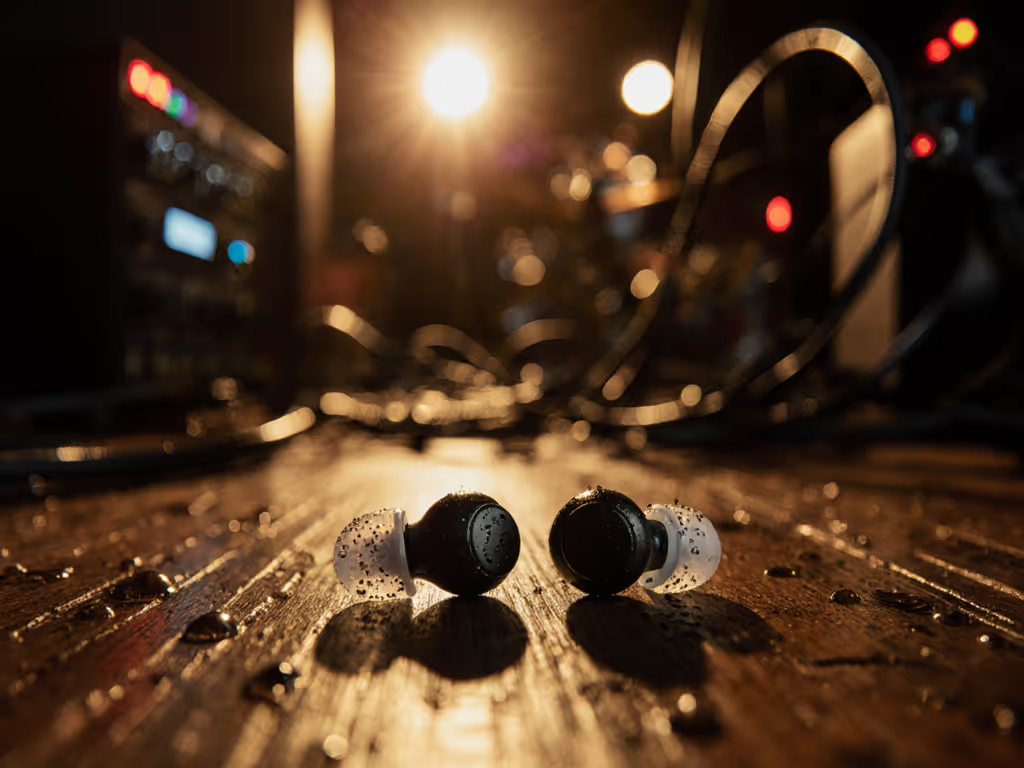
Regular earbuds often boost bass and treble at the expense of midrange frequencies where human voices live. But a poor seal doesn't just thin the mids. It carves a canyon in your frequency response. In a studio quiet as snowfall, I once swapped tips and watched the response curve smooth where a leak had carved a low-end decline. That visual clicked with what I heard: the narrator's voice had lost body. Since then, I tune with seal first, then EQ, because you can't equalize what isn't reaching you.
For narration audio quality and extended listening comfort, this principle becomes non-negotiable. A loose fit creates occlusion effect inconsistency, pressure build-up, and fatigue. A firm, stable seal delivers balanced midrange, consistent isolation, and hours of fatigue-free listening. For tip shapes, shell sizes, and materials compared across brands, see our comfort fit earbuds guide. The mechanics precede the electronics.
The Sealed-Fit Priority: In-Ear Earbuds with Stable Geometry
What They Solve
Sealed in-ear earbuds anchor sound delivery and block external noise, allowing you to follow narration at lower volumes (a genuine hearing-health win). If you're weighing passive isolation versus active cancellation, our ANC technology explained primer clarifies how ANC affects voice clarity and fatigue. If your ears are symmetrical and your ear canal accepts standard silicone or foam tips, sealed designs offer the most predictable midrange delivery.
Key Fitment Principles
- Nozzle angle: A forward angle (12-22°) matches most ear canals and minimizes pressure on the tragus.
- Shell width and depth: Narrower shells (< 20 mm) suit smaller ears; deeper shells (> 15 mm) reach listeners with longer canals.
- Tip material: Silicone tips offer instant fit confirmation (hard snap); foam tips conform slowly but may irritate after hours.
- Weight and center of mass: Lighter buds (< 5 g each) resist rotation; top-heavy designs drift with chewing or movement.
Recommended Models
TOZO T10 sits at the entry-level performance tier. Lightweight and small enough for discrete daily use, these buds utilize TOZO's ORIGX acoustic technology and deliver up to 45 hours of battery across the charging case. For audiobook listeners with standard ear canals and modest budgets, they provide a clear sound experience without intrusive heft. The trade-off: no advanced noise cancellation tuning, so ambient noise bleed during focused listening may be noticeable.
TOZO A1 targets listeners with smaller ears or anyone overwhelmed by standard-sized shells. Compact design, pocket-friendly case, and app-based customization make it accessible, but verify that even the smallest tips seal in your canals before committing (this is the critical fit gamble for all compact designs).
Final Audio E1000 and Strauss & Wagner EM8C/SI201 appear in professional audiobook circles, priced at $49.95 and up. The Strauss & Wagner models include USB-C and Lightning terminations built-in, eliminating adapter friction (a fit-adjacent win when charging and connectivity matter as much as acoustic fit).
Sony WF-C510 ($59.99) sits in the mid-mass market, balancing price and midrange clarity. No single review harps on fitment issues, suggesting reasonably forgiving geometry for mixed ear shapes.
The Open-Ear Pivot: Comfort Over Isolation
When in-ear fatigue or pressure sensitivity dominates your life, audiobook fatigue prevention shifts from sealed inserts to open-ear designs that suspend the buds outside the ear canal entirely.
Why Open-Ear Works for Audiobooks
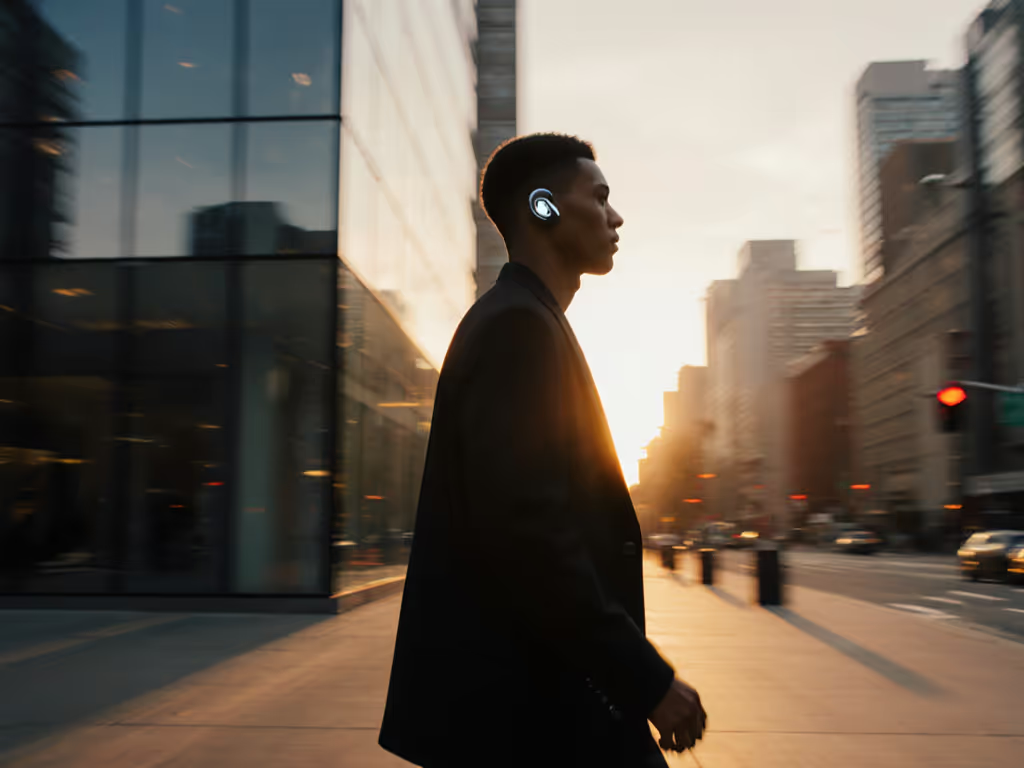
Open-ear designs eliminate pressure buildup, reduce occlusion effect, and let you hear ambient sound (critical if you're listening while cooking, commuting, or caring for children). If you prefer in-ear buds but still need awareness, learn how transparency mode works and when it outperforms open-ear designs. They also suit side-sleepers and anyone whose ear geometry punishes eight-hour sealed sessions.
Trade-Offs
No physical seal means less isolation; external noise intrudes at lower SPLs, so you raise volume. Also, bass response depends on proximity to the ear opening rather than sealed-chamber tuning, so expect leaner low-end than sealed designs.
Recommended Models
Soundcore AeroFit Pro exemplifies the modern open-ear formula. Its air-like comfort uses ultra-soft materials and rests gently outside the ear canal, eliminating pressure while allowing hourly wear without fatigue. Flexible ear hooks and an optional detachable neckband provide snug security for active listening, walks, and workouts. The 16.2 mm oversized drivers and LDAC technology support deliver robust bass and clear mids despite the open design, and voice actor clarity remains full-bodied and engaging. IPX5 water resistance and SweatGuard™ protection make it durable for humid conditions or sweat exposure.
TOZO OpenEarRing folds into and onto your ear, providing an out-of-ear experience without pressure or canal irritation. Lightweight, with its own charging case and noise cancellation capability, it suits outdoor and home use. The design constraint: it won't work if your ear contour doesn't accommodate the fold-and-anchor geometry (fit variance is high here, so in-store trials matter).
Buderflys Curiosity G2 applies a cable system that moves with your ears as you chew, talk, and change head position. Every flex and shape shift is absorbed, making the fit so adaptive you may forget you're wearing them. Ideal for long-term listening with high activity tolerance.
Fit writes the frequency plot before any EQ matters.
Over-Ear Headphones: The Extended-Session Gold Standard
For pure audiobook marathons (4+ hours), over-ear headphones dominate because weight distribution, ear pad material, and clamp-force tuning surpass in-ear ergonomics.
Comfort Criteria for Marathon Listening
- Weight: Under 10 ounces prevents headache onset.
- Ear pad material: Velour or memory foam breathes better than pleather; cooling surfaces reduce fatigue.
- Clamp force: Gentle but secure, too tight causes pressure pain; too loose compromises isolation and drifts during movement.
- Headband padding: Distributes pressure across the crown, not a point load.
Recommended Models
Sony WH-1000XM4 claims the "best overall" title for audiobooks. Exceptional vocal clarity, 30-hour battery (40+ chapters per charge), and premium comfort justify the investment for commuters and travelers. Midrange-forward tuning makes narration intelligible without listener strain.
Sony WH-1000XM6 (2026 update) refines the formula further with class-leading noise cancellation and relaxed comfort tuning. If budget allows, the generational leap in ANC consistency and seal stability (via improved ear-cup geometry) accelerates fatigue reduction.
Bose QuietComfort Ultra prioritizes all-day listening over peak audio drama. Built for extended sessions, it pairs Bose's best noise cancellation with quiet mode for deep focus and a wear mode to stay connected. Slightly warmer tuning than Sony can feel forgiving on vocal harshness if the audiobook's production is thin.
Bose QuietComfort 45 offers excellent comfort and clarity at a lower price tier than Ultra, making it a pragmatic pick for budget-aware commuters.
Anker Soundcore Life Q20 serves the conscientious budget listener, offering premium sound and smart customization with reliable battery performance, a dependable upgrade if you're trading up from cheap earbuds.
Apple AirPods Max appeals to iPhone users seeking tight iOS integration and naturally clear voice rendering. Premium build and spatial audio enhance narration depth for supported content, though the $549 entry price reflects luxury positioning over pure audiobook optimization.
Sennheiser Momentum 4 combines premium tuning, customization, and battery endurance; described as reliable audiobook-ready in professional circles.
Comparing Fit and Seal Performance Across Types
| Factor | Sealed In-Ear | Open-Ear | Over-Ear |
|---|---|---|---|
| Fatigue (8 hrs) | Moderate (seal pressure) | Low (no pressure) | Low (distributed weight) |
| Isolation Quality | Excellent | Poor | Very Good |
| Ambient Awareness | None | Full | Partial (over-ear leak) |
| Bass Response | Full-range (sealed chamber) | Lean (open design) | Controlled (driver + pad) |
| Midrange Clarity | High (when seal is stable) | Good (proximity-dependent) | High (tuning-focused) |
| Stability (motion) | Good with wings/fins | Excellent (no falling risk) | Excellent (strapped to head) |
| Weight Impact | Light (5 g per bud) | Very Light (3-4 g) | Heavier (distributed) |
| Setup Time | 2-5 min (tip selection) | Immediate (universal) | Immediate (no tips) |
| Fit Customization | High (multiple tips) | Medium (ear hook options) | Low (standard pads) |
Data Points That Matter: Midrange Emphasis and Battery Longevity
Audiobook-specific tuning flags midrange presence (1-4 kHz peak) without muddiness. Compare spec sheets cautiously, as many brands don't publish detailed frequency response curves. Instead, cross-reference professional measurements (e.g., crinacle or oratory1990 databases) or search for "audiobook earbuds" + "frequency response graph" to visualize midrange lift.
Battery life deserves precision. For real-world runtimes versus spec sheets, see our battery life guide on real vs advertised results. A 30-hour case (Sony WH-1000XM4) translates to roughly 40+ chapters of a typical audiobook at standard pace. A 45-hour case (TOZO T10) covers extended road trips without a charger. For commuters, 8-10 hours of single-charge playtime suffices; for travelers, 20+ hours is prudent.
Practical Fit Testing Before Purchase
- Tip Variability: Request or purchase accessory tip packs if the default doesn't seal in both ears. Asymmetric ears are common; one side often requires a half-size different tip.
- Seal Confirmation: Press the bud gently into your ear until you hear a subtle bass boost and feel suction. If no suction occurs, the seal is incomplete. Sound will thin, and isolation will fail.
- Movement Test: Jog in place, shake your head side-to-side, and chew. Stable designs shouldn't rotate or loosen.
- Pressure Tolerance: Wear the buds for 30-60 minutes in-store (or request a trial period online). Pressure builds gradually; early discomfort predicts multi-hour fatigue.
- Ambient Noise at Target Volume: Play a quiet audiobook passage at your typical commute volume and confirm that external noise isn't drowning it out. Poor seal forces volume escalation, which accelerates hearing fatigue.
Final Verdict: Fit First, Features Second
Minimal looks, maximal clarity. This principle holds across all formats. Whether you choose sealed in-ears for commuting, open-ears for home listening, or over-ears for marathon sessions, the hierarchy remains fixed:
- Fit and seal stability determine the frequency response you actually perceive. Misalignment sabotages every other spec.
- Comfort geometry (weight, pressure, ear pad material) controls fatigue thresholds. Eight-hour audiobooks expose poor ergonomic choices within the first hour.
- Midrange tuning and battery longevity follow as secondary but essential factors once fit is solved.
- Noise isolation matters for focused listening but trades against ambient awareness; choose based on your listening environment.
For small-eared users and side-sleepers, open-ear designs like the Soundcore AeroFit Pro or Buderflys Curiosity G2 eliminate pressure entirely and justify their cost through extended session viability. For standard ear geometries prioritizing maximum isolation and full-range sound, sealed designs (TOZO T10, Sony WF-C510) offer predictable performance at accessible price points, provided you invest 10 minutes in tip selection and seal verification.
For committed audiobook marathoners and travelers, over-ear headphones (Sony WH-1000XM4 or WH-1000XM6) deliver the ergonomic reliability and battery endurance that justify their weight and case footprint. The 30+ hour battery alone eliminates the mid-journey charging anxiety that plagues long commutes or road trips.
Before any purchase, prioritize fit trials (in-store, rental programs, or generous return windows) over spec sheets. Ready for specific picks? Browse our best earbuds for audiobooks tested for fit and voice clarity. The best audiobook earbud is the one your ears don't reject at hour three. Everything else (noise cancellation, spatial audio, premium drivers) follows only after fit writes the frequency plot.
Related Articles