Earbuds for Your Climate: Performance Across Zones
By Maya Ríos • 7th Mar
Introduction
Your earbuds face as many environmental stressors as you do. Whether you're running through summer humidity, commuting in subfreezing temperatures, or working at high altitude, your listening environment shapes how your earbuds perform, and how your ears feel after hours of listening. Climate-specific earbud performance isn't just a marketing angle; it's the difference between buds that seal consistently and ones that slip, between battery life that holds and drain that surprises, between comfort that lasts and discomfort that compounds.
I learned this lesson the hard way. After a long-haul flight, I removed my earbuds and felt that dull, lingering ache (like a tight shoe after a wedding). The cabin pressure, humidity, and sealed environment had shifted how my earbuds sat. That experience pushed me to map how pressure, seal stability, and material behavior change across climates. The result: a framework for choosing and maintaining earbuds that perform wherever you are. This guide translates climate challenges into practical decisions, starting with the forces that matter most in your zone.
FAQ: Climate-Specific Earbud Performance
How does humidity affect earbud seal and comfort?
Humidity does three things to your earbuds: it softens foam tips, it changes how silicone sits against wet ear canals, and it can trap moisture inside your ear, creating pressure imbalances that worsen the occlusion effect.
Foam tips and humidity: Foam ear tips (common in many flagship models) absorb moisture and expand slightly. This can initially improve seal, but over time the foam degrades faster in humid climates, losing density and becoming mushy.[1] If you're in a high-humidity environment (tropical zones, coastal cities, summer gym sessions), expect foam tips to lose their spring after 2-4 weeks rather than 6-8 weeks in drier climates. Silicone tips handle moisture better but offer less initial cushion; the tradeoff is that they resist degradation and are easier to clean daily. For step-by-step care, see our wireless earbud cleaning guide.
Ear canal moisture and pressure: When your canal is genuinely wet (from sweat or water exposure during workouts), a poor-fitting earbud won't seal. More critically, trapped moisture behind an overly tight seal can create suction, intensifying the sensation of fullness and pressure in your ear. This is the occlusion effect, and it's worse in humid conditions because water and sweat make the seal feel tighter than it actually is. A gentle but stable fit matters more in humidity than in dry air. Comfort isn't luxury; it's the precondition for longer listening.
Practical choice: In humid climates, prioritize earbuds with multiple tip options (ideally including both silicone and foam) so you can switch based on the season or your activity. Look for models with venting or relief ports that reduce pressure buildup by allowing air to escape behind the earbud shell.[2] Water-resistant ratings of IPX5 or higher indicate the earbud can handle sweat and light rain, though the rating doesn't guarantee comfort under sustained moisture.
What battery and thermal changes happen in extreme cold?
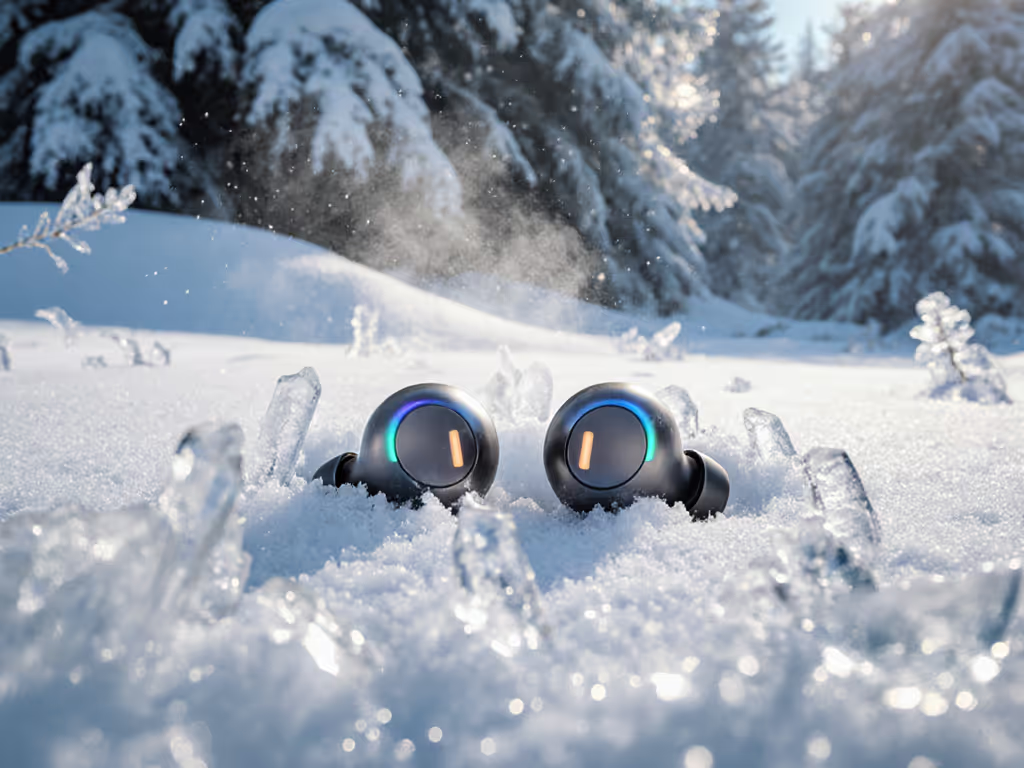
Cold temperatures slow chemical reactions inside your earbud's battery, reducing available charge. You might lose 15-30% of your stated battery life in freezing conditions (below 32°F/0°C), depending on the battery chemistry and design.
Beyond battery: cold also affects the materials around your ear. Silicone becomes stiffer in cold, making insertion less forgiving and potentially uncomfortable if your earbuds are rigid. Foam tips, by contrast, remain flexible but can absorb moisture (including condensation) as you move between cold and warm environments. The seal can break as condensation forms between the tip and your canal.
Practical choice: In cold climates, keep your earbuds in a small, insulated case inside your jacket until just before use. This prevents condensation shock. Choose earbuds with slightly softer silicone compounds or hybrid tips (silicone bonded to a thin foam layer) that stay flexible in cold without becoming rigid. Check the full battery specs under ANC-on and ANC-off conditions; some earbuds show 10-12 hours off but only 6-7 hours with ANC enabled, a gap that widens in cold.[2] For spec-vs-reality insights, read our battery life testing explainer.
How do high-altitude and pressure changes impact earbuds?
Altitude affects air pressure, which has a subtle but real impact on earbuds with sealed designs. As external air pressure drops, the pressure inside your sealed ear canal increases relative to the outside environment. If your earbud seals too firmly, you'll experience increased fullness and discomfort. If the seal is loose, the pressure difference forces audio to sound thin and bass to disappear.
This matters most for frequent flyers, mountain athletes, and people living above 5,000 feet. For flying-specific tips, check our long-flight earbuds comfort guide. The effect intensifies during cabin pressurization changes in planes, where you might notice ear fullness or temporary hearing sensation changes.
Practical choice: Earbuds with passive venting or relief channels (ports that let pressure equalize gradually) perform better at altitude than fully sealed designs. Look for earbuds marketed with "pressure relief" or designs that specifically mention allowing air circulation. If you're flying frequently or live at altitude, test your current earbuds during a short high-altitude excursion (or a pressurized flight) before committing long-term use. Pressure down, clarity up, and at altitude, pressure management is not optional.
What durability concerns arise in desert or extremely dry climates?
Desert and dry climates present a paradox: low humidity is gentler on foam tips and reduces moisture-related degradation, but extreme dryness can cause different problems.
Extreme aridity can dehydrate silicone tips, making them more brittle and prone to cracking. Silicone also attracts dust more readily in dry environments, and tiny dust particles can work into your ear canal if they cling to an earbud tip. Salt and mineral residue from sweat evaporation can accumulate on the earbud shell and inside the charging contacts, potentially causing corrosion over time.
Battery life often improves in cold, dry climates because battery chemistry is more efficient; however, the lack of moisture can cause static buildup, which occasionally triggers firmware glitches (rare but possible with some earbuds).
Practical choice: In desert climates, clean your earbuds and tips weekly with a soft, damp microfiber cloth to remove dust and salt residue. Silicone tips may last longer in dry air, but rotate them more frequently (every 4-6 weeks) rather than waiting for degradation. Store earbuds in a moisture-controlled case when not in use; moisture-absorbing packets (like silica gel) inside your case are overkill but won't hurt. Choose earbuds with sealed charging contacts or gold-plated connectors that resist corrosion.[3] If you live in harsh climates, see our extreme weather earbuds guide.
How should I maintain earbuds if I travel between climates frequently?
Climate shock (moving rapidly from cold to humid to dry conditions) stresses your earbuds and your ear. Condensation forms when you bring cold earbuds into a warm room. Humidity evaporates quickly when you move from tropical to desert air, potentially dehydrating silicone and leaving salt deposits.
Maintenance strategy: Allow your earbuds 15-30 minutes to acclimate after moving between extreme climates before inserting them. Keep a lint-free cloth and a small cleaning solution (isopropyl alcohol, 70%) in your travel kit. After every climate change, give your earbuds a gentle wipe, especially the nozzle and tip.
Battery management: If you're traveling across time zones and climate zones, charge your earbuds to 50-80% rather than full capacity during travel. Lithium batteries degrade faster when fully charged in temperature extremes. Use the ANC sparingly in extreme conditions; it consumes more battery and can amplify pressure sensations if the seal isn't perfect.
Rotate your tip options if you have them. Bring silicone, foam, and hybrid tips if your earbuds support multiple materials. What works perfectly in Seattle's 60% humidity might feel wrong in Phoenix's 20% humidity. Plan for a quick test fit after you land.
Which water-resistant ratings actually matter for climate performance?
IP ratings describe protection against solid particles (first digit) and water (second digit). For earbuds, the second digit is what you'll hear most: IPX4 means splash-proof; IPX5 means water-resistant enough for sweat and light rain; IPX7 means submersible to shallow depths; IPX8 means full waterproof rating. For a practical breakdown of ratings and real-world protection, see our IPX ratings explained.
Here's the catch: the rating tells you how the earbud handles water, not how it handles fit under water or sweat. An IPX5 earbud can survive being rained on, but if your ear canal is soaking wet and your seal breaks, the audio quality will suffer and pressure discomfort will spike. An IPX8 earbud won't fix a loose fit.
Ratings matter most when you're moving between climate zones. An IPX5 rating suggests your earbuds can survive humidity transitions, sweat during workouts, and occasional splashes. That's the threshold for most active listeners.[1][2] If you're a competitive swimmer or do water sports regularly, IPX7 or IPX8 is worth the investment. For everyday commuting and gym work across varied climates, IPX5 is sufficient, but only if your seal is stable.
Pressure Down, Clarity Up: The Climate-Fit Framework
Your climate choice should start with this priority: stable seal first, resistance rating second. A seal that holds across humidity and temperature changes is worth more than a rating that looks impressive on a spec sheet.
Use this framework when evaluating earbuds for your climate:
- Humid and hot climates: Prioritize multiple tip materials, venting, and a track record in tropical reviews. Silicone dominates here; foam fatigues fast.
- Cold climates: Seek flexible materials, condensation management, and realistic cold-weather battery specs. Hybrid or soft-silicone tips win.
- High altitude: Look for passive pressure relief and test fit at your elevation.
- Dry climates: Durable silicone or hybrid tips, sealed charging contacts, and frequent cleaning as part of your routine.
- Mixed climates (frequent travel): Earbuds with multiple tip sizes and materials, a comfortable baseline fit, and a clean, simple design that resists dust accumulation.
Actionable Next Steps
- Identify your primary climate and secondary environments (e.g., tropical city with winter travel). Note your altitude, average humidity, and temperature range.
- Test your current earbuds' stability and comfort in your toughest conditions (highest humidity, coldest day, or most demanding workout). If the seal shifts or discomfort rises, your current earbuds are climate-mismatched.
- Review earbud reviews from your specific climate zone. Look for user reports from tropical, desert, and cold climates separately; don't rely only on temperate-zone reviews.
- Prioritize models with multiple tip options and realistic water-resistance ratings (IPX5 minimum). Ask: Can I buy replacement tips easily? Are they affordable?
- Before committing to new earbuds, confirm return policies and try-at-home programs. Climate fit is personal; 30-day risk-free returns are standard and worth insisting on.
- Plan a maintenance schedule aligned to your climate. Humid zones need weekly cleaning; dry zones need monthly silicone care; cold zones need condensation management. Your earbuds' lifespan depends on it.
Comfort across climates isn't a luxury, it's the foundation for listening longer and safer, wherever you are. Start small: audit your current fit, test one climate scenario, and adjust. Your ears will thank you.
Related Articles